
A Broadbean website integration connects the recruitment technology used to distribute and manage vacancies with the public recruitment website. For a WordPress recruitment site, Broadbean can supply live job data while the website controls the candidate experience, search, content, brand and SEO. The important bit is not to build the website around Broadbean; build a strong recruitment website that integrates cleanly with Broadbean and can evolve as recruitment technology changes.
What is a Broadbean website integration?
Recruitment businesses often manage vacancies in a single system and publish them across multiple destinations. A website integration removes the need to recreate the same vacancy manually inside the CMS. Relevant job information can flow into the website, where it is presented through the site’s own templates, search and filtering. Candidate applications can then be passed back into the recruitment workflow where the implementation requires it.
That separation matters. Broadbean is part of the recruitment technology stack; the public website still needs to work as a marketing, content, search and conversion platform.
What should Broadbean and the website each do?
| Responsibility | Broadbean / recruitment stack | Website / WordPress |
|---|---|---|
| Vacancy source and distribution | Primary operational role | Receives and presents relevant job data |
| Job page experience | Supplies data | Controls layout, content and calls to action |
| Search and filtering | Supplies structured fields | Translates fields into candidate-friendly controls |
| Applications | Receives application data where configured | Provides the candidate-facing journey |
| Marketing content | Not its primary purpose | Owns sectors, services, consultants, insights and campaigns |
| SEO | Provides underlying job information | Controls indexable pages, metadata, internal links and URL behaviour |
Broadbean and WordPress
WordPress works well as the public layer because jobs can sit inside a much richer content ecosystem: sector pages, consultant profiles, employer services, candidate resources, salary guides, research, case studies and campaign landing pages. Instead of sending candidates into a visibly separate job-board experience, a bespoke implementation can make vacancies feel native to the website. The navigation, typography, responsive behaviour, analytics and calls to action remain consistent even though the vacancy data originated elsewhere.
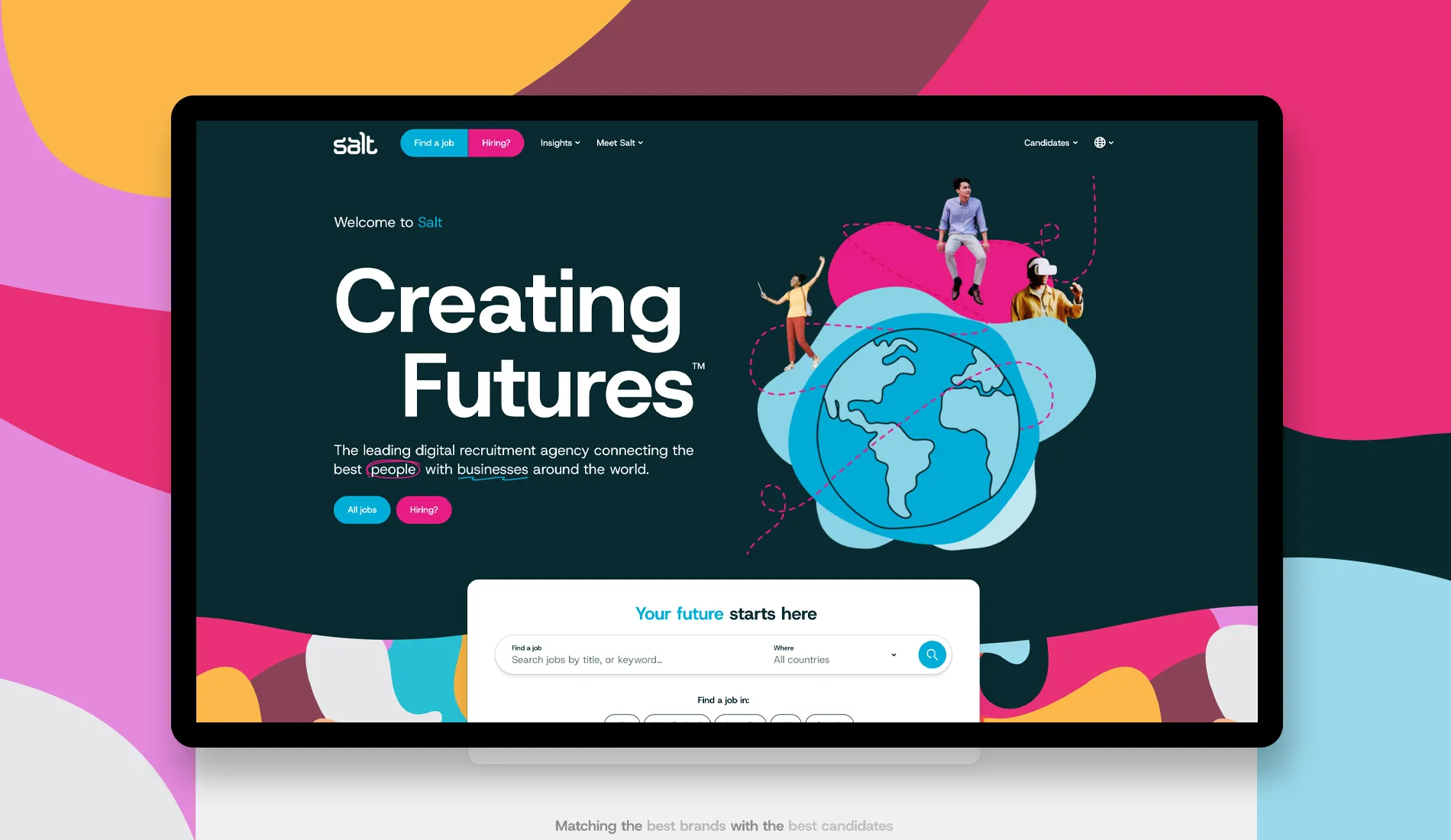
Salt Recruitment
Salt Recruitment is the strongest current Fhoke example of this approach. Fhoke consolidated 14 regional Salt websites into a single centralised WordPress platform with multilingual capabilities. Broadbean is integrated into the recruitment experience, so live vacancies can feed into the website, and candidate applications can return to the recruitment workflow. The important part is what candidates see: one coherent Salt experience rather than a marketing site on one side and an unrelated external jobs system on the other.
What data should flow into the website?
The exact model depends on the recruitment business. Useful vacancy data commonly includes job title, location, discipline or sector, job type, salary information where published, description, source ID, consultant relationship and opening or closing status. Do not automatically expose every Broadbean field. Recruitment systems contain data for recruiters as well as candidates. The public website should use the subset that improves discovery, understanding and application.
Design search around candidates, not internal taxonomy
A common integration mistake is allowing the structure of the recruitment platform to dictate the interface. If internal teams use several overlapping categories, codes or locations, that does not mean candidates should see them all. Start with how people actually search—keyword, location, specialism, job type, working arrangement or other genuinely useful criteria—then map Broadbean data into that model.
Website / WordPress
The application experience should collect the minimum information needed at the first stage. Long forms create friction, particularly on mobile. Where the recruitment workflow permits it, keep the initial application focused on essential contact details, the CV and genuinely necessary role-specific questions. The candidate should not need to understand which system receives the application.
For most recruitment agencies we work with, that comes back to WordPress because it keeps the marketing team in control while giving developers enough freedom to integrate the systems that drive the business. Besides, we do bill ourselves as a leading London WordPress agency; we’ve also been using it since 2008, so we know it’s more than capable.
Why jobs should feel native to the website
Native vacancy pages keep candidates inside the brand experience, use the same responsive design system, connect naturally to related jobs and consultant content, support coherent analytics and allow SEO and internal linking to be managed as part of the wider website.
SEO and expired job URLs
Recruitment websites create a large volume of short-lived pages, so expired vacancies need an explicit strategy. When a job closes, decide whether the URL should remain temporarily with an expired notice and related vacancies, redirect to an appropriate category, or be removed. What matters is avoiding thousands of empty, broken or misleading job URLs and ensuring candidates have a useful next step.
What happens when Broadbean is unavailable?
Third-party services can experience outages or slow responses. A robust integration should consider caching, retry behaviour, logging and graceful user-facing states. The wider marketing website should remain operational even when the recruitment integration has a temporary problem.
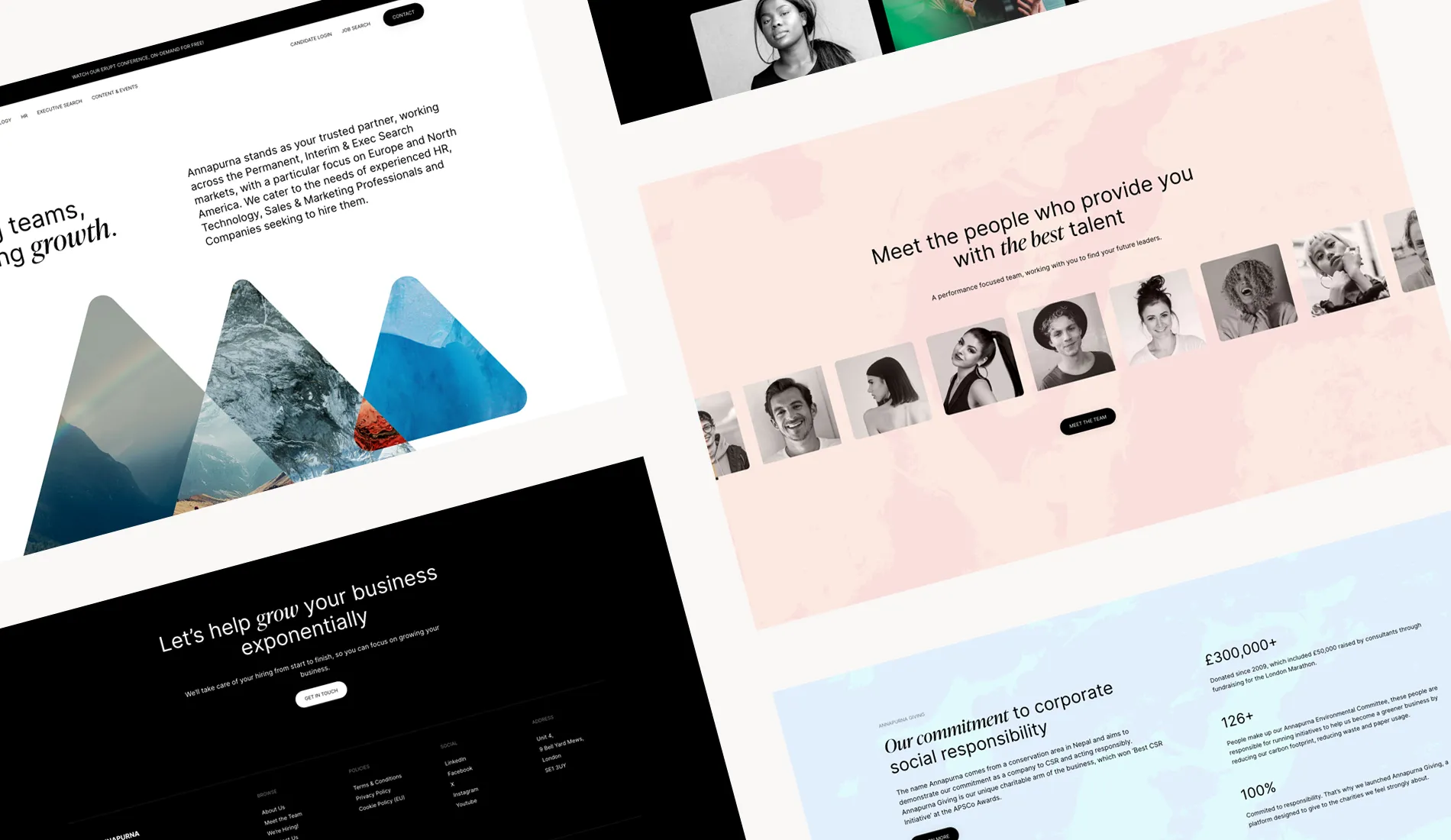
recruitment technology changes
Annapurna Recruitment provides a useful second example. Its website originally integrated Bullhorn for jobs and applications. Fhoke later helped them move away from the Bullhorn job feed to Broadbean via JobRelay in 2025. The lesson is more important than the vendor change: never tie a recruitment website to a single piece of recruitment software, because replacing that software could mean replacing the entire website.
Fhoke’s view
Don’t build a Broadbean website. Build a good recruitment website that integrates with Broadbean. The candidate experience, employer journey, content model and brand should belong to the website. The recruitment technology should sit behind that experience as a replaceable systems layer. That gives the recruitment business far more freedom when its technology, regions or operating model change.
Broadbean integration checklist
- Map the source vacancy fields before designing search.
- Decide which fields candidates actually need to see.
- Define how jobs enter and leave the website.
- Define how applications and CVs return to the recruitment workflow.
- Keep vacancy pages native to the site’s design system.
- Plan search, filtering and zero-result states.
- Plan expired-job URL behaviour before launch.
- Consider caching, logging and failure handling.
- Track applications and important conversion events in analytics.
- Keep the integration modular enough to replace or evolve later.
Frequently asked questions
Can Broadbean integrate with WordPress?
Yes. A bespoke WordPress recruitment website can receive and present jobs from the recruitment stack while WordPress manages the wider site, content and candidate experience. The exact technical approach depends on the systems and services in the client’s Broadbean setup.
Should Broadbean control the design of the jobs pages?
No. Where the integration approach allows, job data should be presented via the website’s own templates so that vacancies remain part of the same brand and user experience.
Can applications from a WordPress website go back into the recruitment workflow?
Yes, where the integration and recruitment stack are configured to receive them. Fhoke’s Salt implementation is an example of a website where live vacancies feed into WordPress, and applications are returned into the recruitment workflow.
What happens to SEO when a vacancy expires?
The website needs an explicit expired-job strategy. Depending on the vacancy and search strategy, that may involve an expired notice with related roles, an appropriate redirect or removal.
What if we move away from Broadbean later?
A well-structured website should make the recruitment integration a replaceable layer. Fhoke’s Annapurna work demonstrates why this matters: the recruitment technology behind the website changed without requiring the WordPress theme to be redesigned or rebuilt.


