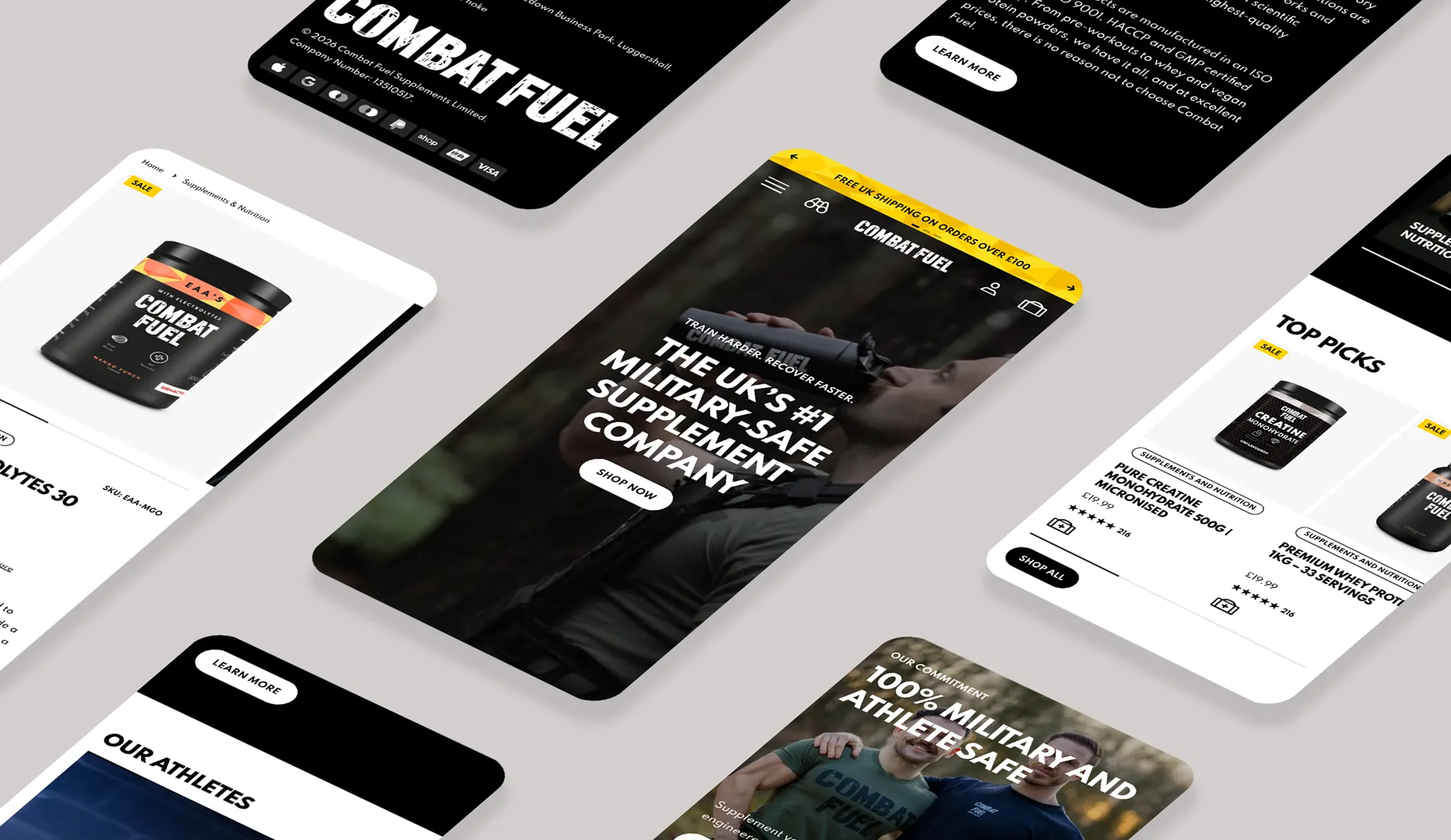
Shopify themes are a little like houses. Buying one that is already built can be quick, practical and perfectly sensible. Problems begin when you knock through six walls, move the staircase and discover the kitchen was never designed for the way you live. An off-the-shelf Shopify theme can be a brilliant starting point, but a growing retailer eventually needs to decide whether adapting somebody else’s structure is still helping or quietly holding the store back.
There is no automatic winner here. We have spent many years (since 2008, in fact) designing and developing websites, and the useful answer has never been “custom everything”. It’s about understanding the brand, catalogue, customers, and commercial plans, then choosing the route that delivers the strongest return. Sometimes that is a carefully configured theme. Sometimes it is a bespoke Shopify storefront designed around the business from the first wireframe.
What is an off-the-shelf Shopify theme?
An off-the-shelf theme is a pre-designed storefront available through Shopify’s Theme Store or another supplier. It normally includes standard templates for homepages, collections, products, blogs, baskets and other common store pages. Merchants can alter colours, typography, imagery and sections through Shopify’s editor without building the entire interface from scratch.
That can be exactly what a new or relatively straightforward store needs. A reputable theme provides a tested foundation, sensible responsive behaviour and established Shopify conventions. It can reduce initial design and development time, helping a business launch sooner and preserve budget for photography, stock, marketing and operations.
The trade-off is that the theme was designed for a wide market rather than your specific business. Its structure, sections and interaction patterns reflect the requirements its creator anticipated. Configuration can change the surface, but it cannot always change the underlying thinking without substantial development.

What makes a Shopify theme custom?
A custom Shopify theme begins with the brand, products, customer journeys and operational requirements. The design system, templates and components are planned for that store rather than selected from a demo site. Developers then build the approved experience using Shopify’s theme architecture, Liquid, JSON, JavaScript, HTML and CSS.
Custom doesn’t mean ignoring Shopify’s strengths or rebuilding functionality the platform already handles well. A good bespoke theme works with Shopify rather than fighting it. It uses native products, collections, sections and merchant controls wherever they are suitable, adding tailored functionality only where it creates genuine value.
The result should give customers a more distinctive and intuitive experience while giving the internal team practical control. If a custom theme looks impressive but requires a developer to change every banner, it’s missed half the brief.
The practical differences
| Consideration | Off-the-shelf theme | Custom Shopify theme |
|---|---|---|
| Initial investment | Usually lower | Higher because strategy, UX, design and development are tailored |
| Launch speed | Often faster for a simple catalogue | Requires a planned design and development process |
| Brand distinction | Limited by the theme’s visual and structural conventions | Designed around the brand from the beginning |
| Customer journey | Uses journeys anticipated by the theme creator | Shaped around real products, audiences and buying behaviour |
| Merchant control | Depends on included sections and settings | Controls can be designed around the team’s workflow |
| Performance | Can include unused features and scripts | Can be kept lean around the functionality the store needs |
| Future development | May become harder as modifications accumulate | Can provide a clearer foundation for planned growth |
When an off-the-shelf theme makes sense
A ready-made theme can be the right commercial decision when the store is new, the catalogue is relatively simple, and the customer journey follows familiar patterns. If the priority is validating demand before taking the real plunge, the business may gain more from launching quickly than from perfecting a bespoke interface before the first order arrives.
- The brand can work comfortably within an existing layout.
- Products have straightforward variants and information requirements.
- Standard navigation, collection and product templates are sufficient.
- There are few specialist integrations or merchandising rules.
- The available budget is better invested in stock, content and customer acquisition.
- The team accepts that a more tailored rebuild may follow once the model is proven.
The key is to treat the theme as a deliberate first phase rather than pretending it will satisfy every future ambition. Choose a well-supported product, avoid modifying its core beyond recognition and document any custom work. That preserves a sensible upgrade path instead of creating a one-off version nobody can maintain.
When bespoke starts earning its keep
Custom theme development becomes more valuable when the storefront itself influences why customers choose the business. Established brands often need a digital experience that expresses their personality as clearly as their packaging, stores or campaigns. A familiar template with changed colours may not communicate that distinction.
Catalogue complexity is another signal. Large ranges, compatibility requirements, technical specifications or unusual product relationships may demand carefully planned navigation, filters and comparison tools. The customer should not need to understand the retailer’s stock database to find the right item.
Bespoke design also makes sense when content plays a larger role in selling. Editorial guides, buying advice, brand stories and campaign landing pages can be integrated into the store rather than pushed into generic blocks below a product grid. For higher-consideration purchases, that blend of commerce and content can build the confidence that moves somebody towards checkout.
Count the cost of adapting the wrong foundation
A theme licence may be inexpensive, but the licence is not the whole cost. Add design configuration, specialist apps, development changes, maintenance and the internal time spent working around limitations. A low starting price can become less attractive when every campaign requires another exception.
We often see stores where years of additions have created overlapping sections, inconsistent templates and scripts loaded for features that are no longer used. Nobody intended to create a complicated store. It happened one urgent fix at a time. Eventually, the cost of preserving those decisions exceeds the value of replacing them with a cleaner system.
A custom theme should improve life behind the scenes too
The merchant experience matters because stores never stand still. Products change, campaigns launch, ranges expand and trading teams need to respond quickly. During discovery, we ask who updates the site, which changes happen regularly and where the existing process causes friction.
That informs the sections, settings and templates we build. Teams can create landing pages, change merchandising, introduce campaigns and update supporting content without breaking the design system. The aim is controlled flexibility, enough freedom to keep the store fresh, with sensible guardrails that protect consistency, accessibility and performance.
What Brigade Overland taught us about evolution
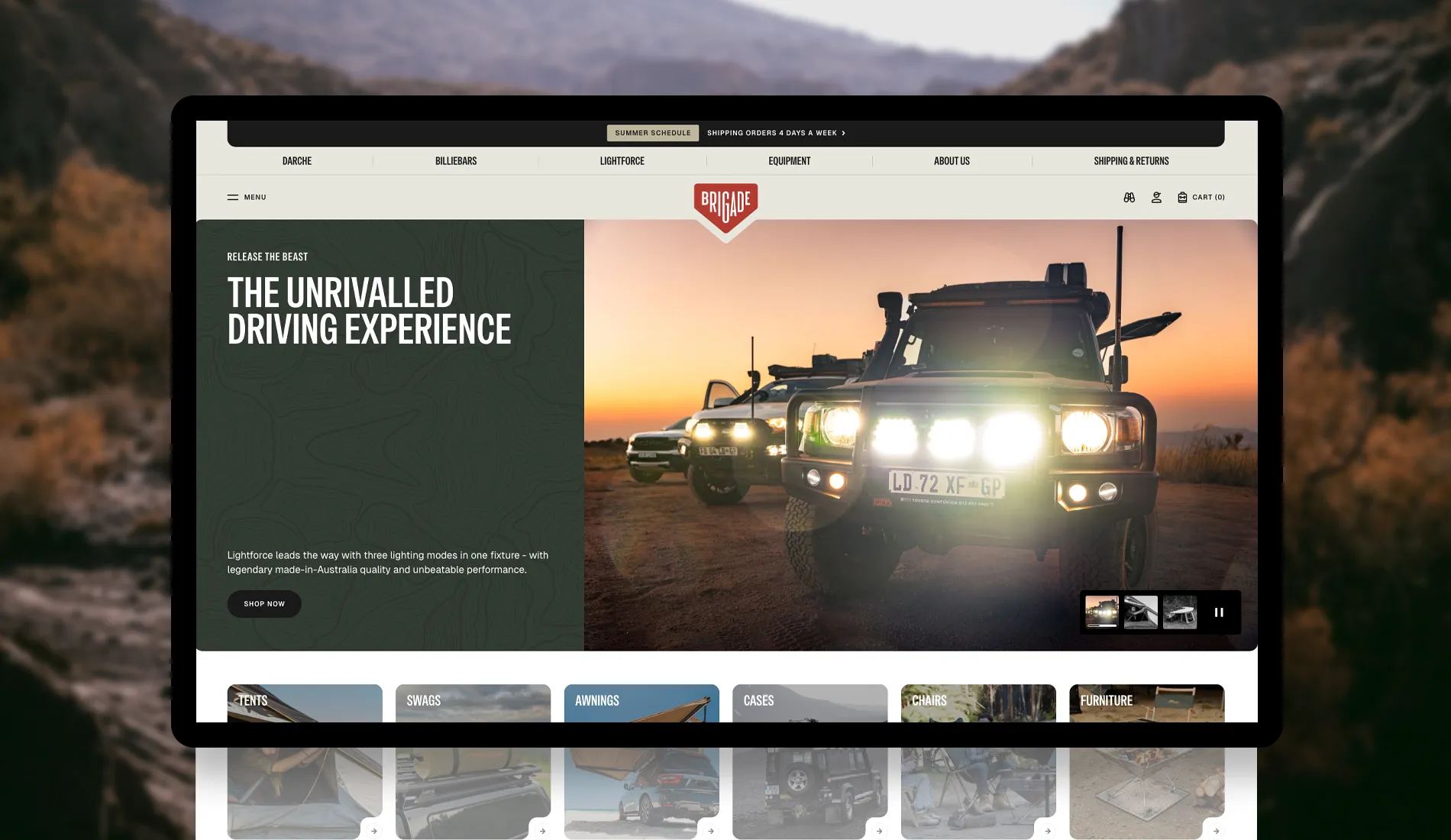
When we first worked with Brigade Overland, we created the brand and a WooCommerce store that helped launch the business. Five years later, the company had grown, Shopify had evolved, and the operational requirements had changed. Replatforming was not an admission that the original decision was wrong. It was evidence that the business had moved forward.
For the new store, we retained the character that made the brand recognisable while designing a more refined Shopify experience around its expanding outdoor product range. The bespoke theme gave us control over how products were presented and how the store felt, while Shopify simplified the platform beneath it.
Questions to ask before deciding
- Does the store need to look and behave distinctly different from competitors using similar themes?
- Can customers find and understand products using the theme’s existing navigation and templates?
- Which integrations and apps are essential, and how will they affect the storefront?
- Can the internal team create campaigns and landing pages without developer support?
- How much customisation would a ready-made theme need before launch?
- Will those changes remain maintainable when the theme is updated?
- What is the expected value of improved conversion, merchandising and brand confidence?
- Is the business validating a new idea or investing in a long-term retail platform?
Bespoke is valuable when it solves something real
A custom Shopify theme shouldn’t be commissioned just to say the store is bespoke. It earns its value by making products easier to discover, expressing the brand more clearly, improving the buying journey and giving the team a stronger platform for future work.
Equally, an off-the-shelf theme is not automatically the cheap or unambitious choice. Used for the right business at the right stage, it can be efficient and effective. The mistake is choosing either route before understanding what the store needs to do.
Before speaking to a Shopify agency, gather the current theme details, app list, analytics, customer feedback and examples of changes the team struggles to make. Bring the next two years of commercial plans as well as today’s frustrations. That evidence helps distinguish problems caused by design, theme architecture, product data or wider operations. It also allows the proposal to separate what must change now from useful improvements that can follow once the new storefront is trading.
Fhoke is a UK Shopify and web design agency working from London and Salisbury with brands around the world. We have spent years turning complex requirements into digital experiences that feel simple, distinctive and practical to manage. If your current Shopify theme is starting to feel more like a renovation project than a storefront, tell us what is getting in the way. We’d love to be a part of the journey!


