A business can have a polished logo, a smart website and a decent product, yet still feel forgettable. That gap is usually where people start asking, “What is brand development, and why do some companies look consistent, credible and commercially sharp while others never quite land?”
Brand development is the ongoing process of defining, shaping and strengthening how your business is seen and felt. It covers strategy, positioning, messaging, visual identity, and the experience people have when interacting with your brand. It is not a one-off design task, nor is it limited to a logo refresh. Done properly, it gives your business a clearer market position and makes every touchpoint work harder. Our branding services are built around exactly that principle.
For growth-focused businesses, that matters because brand perception influences everything from lead quality to conversion rate. If your brand feels vague, dated or inconsistent, prospects often assume the same about your service delivery. If it feels clear, confident and well considered, trust builds faster.
This Article Will Cover:
- What To Know
- What brand development actually includes
- What is brand development in practical terms?
- Brand development versus branding
- Why brand development matters for growth
- The signs your brand needs developing
- How the process usually works
- The trade-offs to be aware of
- What good brand development looks like
What To Know
- Brand development is the ongoing process of shaping how a business is perceived through strategy, positioning, messaging, visual identity, and digital experience — not just logo design or a one-off rebrand.
- Strong brand development aligns business goals, customer experience, and market positioning into a consistent system that improves trust, lead quality, conversion rates, pricing confidence, and long-term growth.
- Branding focuses on visual expression (logos, colours, typography), while brand development includes the deeper strategic work behind it — including messaging, UX, website structure, tone of voice, SEO, and how the brand performs across every touchpoint.
- Effective brand development creates commercial clarity: customers understand your value faster, teams communicate more consistently, websites convert more effectively, and the business becomes easier to market, scale, and buy from.
What brand development actually includes
The simplest way to understand brand development is to think of it as alignment. It brings your commercial goals, your market position and your customer experience into one coherent system.
That system usually starts with a strategy. This means understanding who you are competing with, what your audience values, where your offer fits, and what you want to be known for. Without that work, visual design often becomes subjective. Teams end up debating colours and taglines without agreeing on the business case behind them.
From there, brand development moves into positioning and messaging. Positioning is about the space you want to occupy in the market. Messaging is how you express that clearly and consistently. If your business says one thing in a sales meeting, another on the homepage and something else on social content, the brand is fragmented even if the design looks tidy.
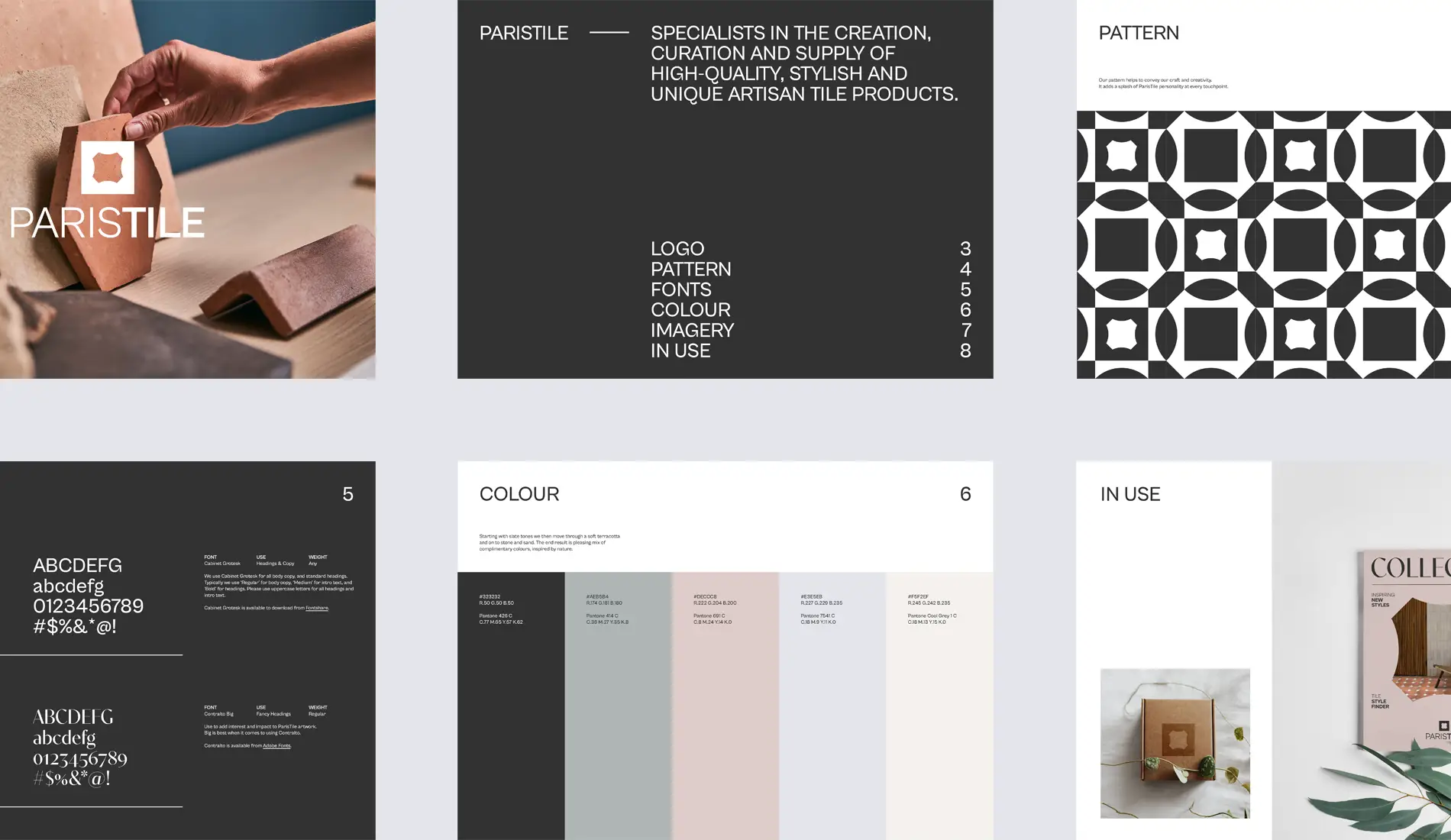
Visual identity comes next, but it should never be treated as decoration. Typography, colour, layout, photography and tone all influence whether your brand feels premium, approachable, technical, established or innovative. The right identity helps customers recognise you quickly and understand what level of service to expect. Projects like Price Pierce and WOW Company branding demonstrate how strategic branding influences perception.
Then there is the digital layer. For most businesses, the website is where the brand either gains credibility or loses it. A strong identity paired with poor usability, slow performance or weak content creates friction. Brand development has to extend into UX, CMS structure, mobile responsiveness, SEO foundations and the practical details that shape how people experience your business online. Articles like how bad UX kills website performance explain why that matters commercially.
What is brand development in practical terms?
In practical terms, brand development is the work that turns a business from a collection of assets into a recognisable, persuasive and scalable brand.
For a new business, that may mean building foundations from scratch – defining the proposition, naming, visual identity, messaging hierarchy and website approach. For an established company, it often means fixing misalignment. Perhaps the business has evolved, but the brand has not. Perhaps the team has grown, the offer has become more sophisticated, or the website no longer reflects the service’s quality.
In both cases, the goal is the same. The brand should make it easier for the right people to understand your value and take the next step.
That is why brand development is rarely just a marketing concern. It affects sales, recruitment, customer retention and pricing confidence. Businesses with a mature brand can often command better margins because their value is easier to see. Businesses with a weak brand tend to rely more heavily on explanation, discounts or repeated reassurance. A strong lead-generation website helps reinforce that value proposition online.
Brand development versus branding
These terms are often used interchangeably, but there is a useful distinction.
Branding is often used to describe the visible expression of a brand – logo, colour palette, typography, visual assets and style. Brand development is broader. It includes the strategic thinking behind the brand, the refinement of its message and the way it performs over time.
That distinction matters because many businesses invest in branding when they really need brand development. They commission a fresh identity, but leave the positioning unclear, the website structure confusing, and the content generic. The result can look better without performing better. Our article on your website being your competitive edge explores this in more detail.
A well-developed brand does not just look modern. It communicates clearly, feels consistent across channels and supports the commercial aims of the business.
Why brand development matters for growth
Strong brands reduce friction. They help prospects understand what you do, who you do it for and why they should trust you. That sounds simple, but it has a measurable effect on business performance.
When a brand is clear and credible, website visitors tend to engage more confidently. Sales conversations start at a higher level because prospects already understand the basics. Marketing becomes more efficient because campaigns are built on a consistent proposition. Internal teams also benefit, as they have a clearer framework for writing content, presenting proposals and representing the business.
There is also a long-term advantage. Brand development creates consistency as a business grows. Without it, each new campaign, landing page or service launch risks pulling the brand in a different direction. Over time, that erodes trust.
For organisations investing in a new website, eCommerce platform or bespoke digital product, brand development is especially important. A rebuild is not just a chance to improve visuals. It is an opportunity to sharpen positioning, improve UX and create a more coherent journey from first impression to conversion. Our eCommerce web development services are designed around that principle.
The signs your brand needs developing
Sometimes the problem is obvious. Your website looks dated, your messaging feels generic, and competitors are presenting themselves more convincingly. Other times, the signals are more subtle.
You may find that prospects do not understand the difference between you and cheaper alternatives. Your team may struggle to consistently describe the business. Your marketing may generate traffic, but not enough qualified leads. Or perhaps the business has outgrown its original identity, making it harder to support premium pricing or enter a new market.
Brand development is also worth considering after a merger, a service expansion, a platform migration or a period of rapid growth. In each case, the business changes first, and the brand can lag behind.
The cost of leaving that gap unchecked is usually inconsistency. That inconsistency then shows up in the website, in proposals, in sales collateral and in the overall confidence the market has in your business.
How the process usually works
A good brand development process should be structured enough to create clarity, but flexible enough to reflect commercial reality.
It often begins with research and discovery. This includes stakeholder input, competitor review, audience insight and an audit of current brand performance. The aim is to understand what is working, what is not, and where the strongest opportunities sit.
Next comes strategy. That could involve defining brand attributes, value proposition, audience segments, tone of voice and positioning statements. This stage matters because it gives creative and digital work a clear direction.
Only then should concept development begin. At this point, visual identity, messaging systems and website direction can be developed with purpose rather than guesswork. The strongest outcomes happen when design and digital thinking are considered together. A brand identity needs to work not only on a brochure or business card, but across responsive websites, eCommerce journeys, CMS templates and ongoing campaign assets. Our website design services are built to support that broader brand ecosystem.
Implementation is where many projects either gain momentum or lose consistency. Guidelines, content structure, user journeys and platform setup all need to support the brand in practice. That includes the less glamorous details such as image standards, SEO fields, training, page templates and governance.
For many businesses, this is where working with a partner that understands both brand and digital delivery becomes valuable. Fhoke approaches brand expression as something that must perform in the real world – not simply look impressive in a presentation deck.
The trade-offs to be aware of
Brand development is not about making everything look expensive or highly polished for its own sake. There are trade-offs.
A very distinctive brand can stand out brilliantly, but if clarity suffers, conversion may drop. A highly corporate presentation may reassure larger buyers, but feel impersonal to a more relationship-led audience. A complete rebrand can create momentum, but it also requires internal buy-in and careful rollout.
This is why brand development should be tied to business objectives, not just aesthetic preference. The right answer depends on your market, your growth plans and the maturity of your current brand.
Some businesses need a full repositioning. Others need to refine what already works and bring it to life more consistently across web, content and sales materials. The point is not to change for the sake of change. The point is a stronger commercial alignment.
What good brand development looks like
Good brand development feels deliberate. The website, messaging, visuals and user experience all support the same idea of the business. Prospects know what you stand for. Internal teams know how to represent you. The brand feels credible at every stage, from first impression to post-sale support.
It should also be usable. If the brand only works when a designer is involved, it is too fragile. Good development creates systems that your team can apply consistently across day-to-day marketing, content updates and future growth.
Most of all, it should make the business easier to buy from. That is the real test. If your brand helps the right customers understand your value quickly and trust you sooner, it is doing its job.
If you are asking what brand development is, the answer is not simply better design. It is the disciplined work of making your business clearer, stronger and more convincing wherever people meet it. When that foundation is right, every future investment in your website, marketing and sales activity has a better chance of delivering real return.
Since our foundation in 2008, and yes, even since 2000 when our founders careers began, we have a ton of experience on where to take brands. Get in touch with us today.


