WordPress is a fantastic platform to power an ambitious online store, but simply installing the WooCommerce plugin won’t be enough to build a successful ecommerce business. The platform offers incredible freedom over design, content, data and functionality. That freedom creates responsibility, too: hosting, updates, integrations, performance, and security all require serious thought and ongoing ownership. The right answer depends less on whether WordPress “can” sell online and more on whether its strengths match the way your business needs to trade.
For product-heavy brands, unusual customer journeys and businesses that value control, WooCommerce can be an amazing fit. Especially over platforms like Shopify or BigCommerce that can be more restrictive, or become very expensive with a daisy chain of apps plugged in. Those platforms, while powerful, tend to suit a smaller team looking for a more standard product catalogue and will feel easier when both platforms are at your back for hosting and support. This guide explains the trade-offs so founders and marketing teams can choose a platform with clear eyes.
This Article Will Cover:
- How WordPress ecommerce works
- The advantages of WordPress for ecommerce
- The limitations and responsibilities
- When WordPress and WooCommerce are a strong fit
- When another platform may be better
- Questions to answer before committing
- How to build WooCommerce well
- Why the agency partner matters
- The verdict: Is WordPress good for ecommerce?
How WordPress ecommerce works
WordPress is a content management system. WooCommerce is a plugin. A bolt-on that adds products, carts, checkout, orders and other commerce features while preserving WordPress publishing capabilities. The combination can sell physical products, digital downloads, services, subscriptions, memberships, bookings and many specialised offers through extensions or custom development.
The software is open source and typically self-hosted. The business chooses its hosting, web design agency partner, theme or bespoke design, payment providers and supporting extensions. That contrasts with a fully hosted platform like Shopify where more infrastructure and product decisions are controlled by one vendor.
| Question | WordPress with WooCommerce |
|---|---|
| Can it sell online? | Yes, from simple catalogues to complex tailored stores |
| Is design flexible? | Highly, particularly with a bespoke block system and theme |
| Who hosts it? | The business chooses and manages a suitable provider |
| Who maintains it? | The owner or an appointed technical partner |
| Can it integrate? | Yes, through established extensions, APIs and custom work |
| Is it automatically right? | No; fit depends on requirements, capability and total cost |
The advantages of WordPress for ecommerce
Exceptional design and functional flexibility
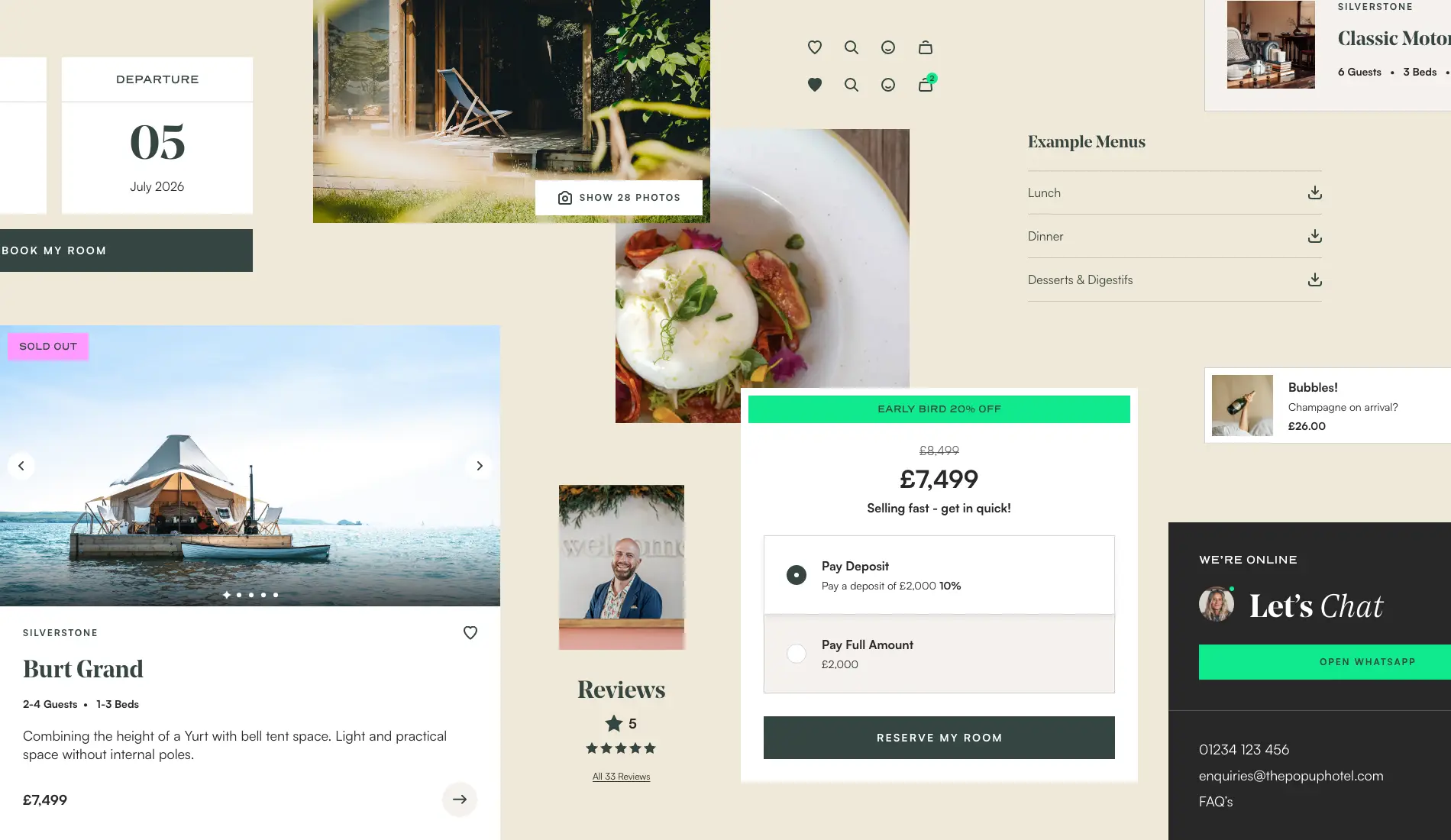
WooCommerce can support a unique storefront rather than forcing every brand into the same theme conventions. Product templates, category journeys, merchandising features and checkout integrations can be tailored around customer needs. Extensions cover many common requirements, while custom development can address genuine differences in pricing, fulfilment or product configuration.
Flexibility needs discipline. Adding an extension for every idea can create overlap, slow down pages, and make updates difficult. Start with requirements, select well-supported tools, and build custom functionality only where it creates enough value to own long-term.
Content and commerce live together
Many customer journeys begin with education rather than a product grid. Buyers may need guides, comparisons, project stories, video, technical resources or inspiration before they are ready to choose. WordPress is strong where editorial content, campaign landing pages, and products need to share a single ecosystem.
Reusable ACF or Gutenberg blocks allow marketers to create rich pages without breaking design rules. Products can appear inside relevant stories, guides can link naturally to categories and campaign teams can respond quickly without commissioning an agency for a new template for every idea.
Ownership and portability
A self-hosted WordPress store gives the business control over code, content and data. You can select infrastructure, change suppliers and extend the platform without depending entirely on one hosted vendor’s roadmap. That control can reduce certain forms of lock-in and support a more tailored operating model.
Payment gateways, hosting, extensions and integrations still have commercial terms and technical lifecycles. So it’s important to take ownership of those, maintain subscriptions, access, and share details with a wider team.
Strong search foundations
WordPress provides control over URLs, titles, headings, content, and internal links, while specialist tools can support metadata, sitemaps, and schema. WooCommerce can perform well in organic search when the catalogue architecture, product information, category pages, filters and technical set-up are built carefully.
No plugin makes a store “SEO friendly” by itself. Search performance still depends on useful content, crawlable pages, sensible indexation, speed, authority and customer demand. Large catalogues need particular care around variants, pagination, navigation, out-of-stock products and duplicate URLs.
It can scale with the business
WooCommerce can support substantial catalogues and transaction volumes when the architecture, code, caching, and hosting are well-suited for the size of the site. A poorly configured small store can struggle; a well-engineered larger store can remain fast and dependable.
The limitations and responsibilities
Maintenance is ongoing
WordPress core, WooCommerce, themes and extensions evolve. Updates need monitoring, backups and testing, especially where checkout or integrations are customised. A staging environment and dependable deployment process reduce risk. Ignoring maintenance eventually turns flexibility into fragility.
Security needs active ownership
Popularity makes WordPress a visible target, although many incidents stem from weak passwords, neglected software, insecure hosting or low-quality plugins rather than the platform alone. Use multi-factor authentication, least-privilege accounts, reputable code, protective infrastructure, monitoring and tested recovery. Keep card data within compliant payment-provider flows whenever possible, not in your sites database.
Performance does not happen automatically
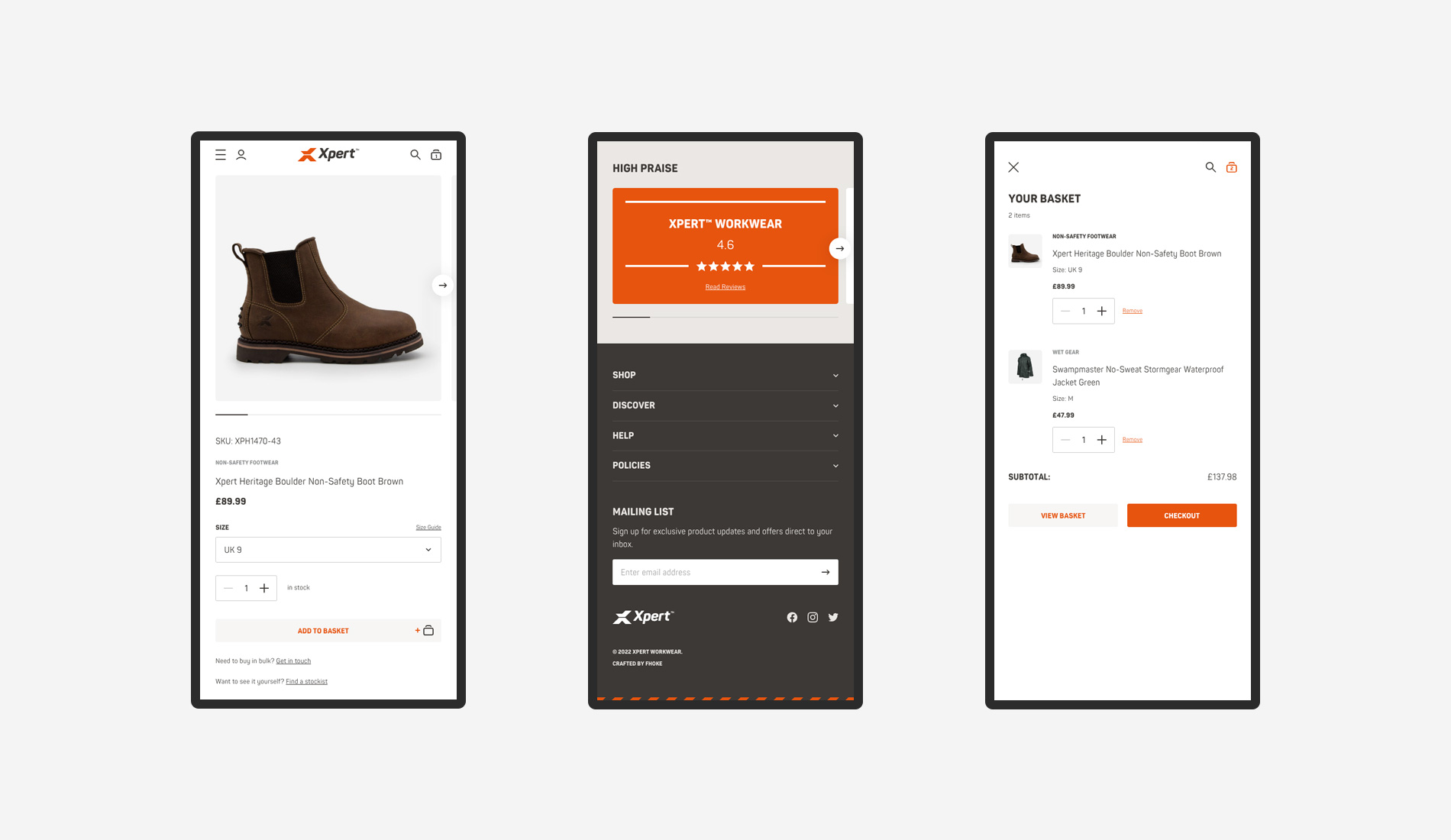
Large images, excessive scripts, slow database queries and too many extensions can damage speed. Performance work should begin in planning and design, not after launch. Choose suitable hosting, optimise media, limit third-party code, cache intelligently and test key journeys under realistic traffic.
Complexity can increase total cost
WooCommerce itself is available without a recurring platform licence, but a professional store is not free. Budget for discovery, design, development, extensions, hosting, maintenance, monitoring, content and future changes. A cheaper initial build can become expensive if its plugin stack is difficult to update or its theme cannot support growth.
| Strength | Responsibility that comes with it |
|---|---|
| Control over hosting | Select, monitor and maintain appropriate infrastructure |
| Extensive customisation | Protect maintainability and avoid unnecessary complexity |
| Large extension ecosystem | Assess quality, compatibility, security and licensing |
| Content flexibility | Create governance and reusable patterns for consistency |
| Data ownership | Secure, back up and manage data responsibly |
| Open-source platform | Fund capable implementation and ongoing technical ownership |
When WordPress and WooCommerce are a strong fit
- Your brand needs a distinctive, content-rich customer experience.
- Products require tailored information, configuration or merchandising.
- Marketing teams need flexible editorial tools alongside commerce.
- You value control over hosting, data and platform development.
- Important integrations can be supported through reliable APIs or custom work.
- The business has access to capable maintenance and support.
- International, wholesale, subscription or service journeys require considered tailoring.
It is particularly effective when the website must do more than display products. A manufacturer may combine technical resources with spare-part sales. A membership organisation may mix editorial pieces, subscriptions and bookable events. A premium brand may need storytelling to carry as much weight as the product catalogue.

When another platform may be better
A hosted platform may suit a small team that wants a more standardised store and doesn’t want the worry of maintaining the underlying platform and is comfortable operating inside the vendor’s set of rules.
- You need a simpler setup and have little technical support.
- Your team prefers a platform that keeps you on rails, over custom control.
- A critical requirement is better served by another platform’s native capability.
- Your organisation already has mature commerce infrastructure around a different ecosystem.
- The proposed WooCommerce solution depends on too many fragile workarounds.
Do not choose against WordPress because of generic claims that it cannot scale, or choose it because it can theoretically do anything. Compare them against your catalogue, customers, integrations, control and budget.
Questions to answer before committing
- What products, variants, currencies, markets and fulfilment routes must the store support?
- Which systems own stock, prices, customer data and orders?
- How important are editorial content and campaign landing pages?
- Which features are truly distinctive, and which can use standard patterns?
- Who will maintain code, plugins, hosting and security after launch?
- What happens during traffic peaks and third-party outages?
- How will data and functionality be transferred if a supplier changes?
- What is the three-year total cost, including support and improvement?
How to build WooCommerce well
Start with discovery and catalogue growth. Design around product data and functional limitations. Keep the extension stack deliberate, use a custom theme or block system appropriate to the brand, and test every purchasing journey. Give editors a clean experience rather than exposing them to complicated settings.
| Area | Good practice |
|---|---|
| Architecture | Model products, categories and content before templates |
| Design | Prioritise mobile, accessibility and clear buying decisions |
| Development | Use sustainable code, controlled dependencies and version management |
| Performance | Test real catalogues and checkout journeys on suitable hosting |
| Security | Limit access, update plugins safely, monitor uptime and downtime and rehearse restores from backups |
| Operations | Validate orders, tax, shipping, refunds and integrations end to end |
| Growth | Measure conversion, margin and customer behaviour after launch |
Why the agency partner matters
WordPress exposes choices that a hosted platform may make for you. A good web design partner turns those choices into a coherent, maintainable system. That agency should challenge unnecessary complexity, understand the commercial journey and explain technical trade-offs in language stakeholders can use.
Fhoke is an expert WordPress agency, with over 18 years experince of strategy, UX, visual design and development. We build control around what the content teams actually need, and build WooCommerce journeys around the way customers really buy. Based in London, we work with organisations whose audiences and operations extend far beyond the UK.
The verdict: Is WordPress good for ecommerce?
Yes—WordPress with WooCommerce can be an excellent ecommerce platform when flexibility, content, ownership and tailored experience matter. It can serve growing and sophisticated stores, provided there is infrastructure, code and maintenance to match ambitious growth.
Fhoke has spent 18 years creating stores, while our founders have worked in agencies since 2000. From our Salisbury and London bases, we have partnered with brands from all corners of the world. That experience tells us the strongest platform decision is never about what’s fashionable to use at the time; it is about giving customers a better journey and the business a dependable route to change.
Choose WooCommerce for the advantages you will actively use, then fund the expertise its freedom deserves. With clear requirements and disciplined delivery, WordPress can turn content and commerce into one powerful engine for growth.


