
A website can look exceptional and still fail commercially. That usually happens when the design gets attention, but the structure, messaging and functionality don’t give people a clear reason to enquire. The best features for lead generation are rarely flashy. They are the practical decisions that remove friction, build trust and guide the right visitors towards action.
For any business focused on growth, that distinction matters. A site is not just a digital brochure. It is often the first serious sales conversation a prospect has with your brand. If the experience feels vague, slow, awkward or unconvincing, lead quality drops and conversion rates follow. If it feels clear, credible and easy to use, the website starts working harder for the business.
This Article Will Cover:
- What To Know
- What the best features for lead generation actually do
- 1. Clear positioning above the fold
- 2. Calls to action that match buyer intent
- 3. Forms that ask enough, not too much
- 4. Trust signals placed where decisions happen
- 5. Service pages built around decision-making
- 7. Speed and technical performance
- 8. Search-friendly page structures and CMS control
- 9. Content pathways for different audiences
- 10. Analytics and conversion tracking
What To Know
- The best lead generation websites focus on reducing friction and increasing trust through clear positioning, relevant calls to action, streamlined enquiry forms and strong trust signals placed where users are making decisions.
- High-converting websites are built around buyer behaviour, with service pages that answer key questions, guide decision-making and help prospects evaluate fit before they make contact.
- Technical fundamentals matter as much as design: mobile usability, fast page speed, SEO-friendly architecture and flexible CMS controls all contribute to higher conversion rates and long-term marketing performance.
- Lead generation works best when strategy, UX, content, analytics and conversion tracking work together, giving businesses the insight and flexibility needed to continually improve enquiry quality and website performance over time.
What the best features for lead generation actually do
Strong lead generation features do three jobs at once. First, they help visitors understand what you offer and whether it is relevant to them. Second, they reduce the effort involved in taking the next step. Third, they give your team better quality information to work with once an enquiry arrives.
That is why lead generation is not about adding a single form and hoping for the best. It comes from the way content, design, technical performance and user experience support each other. The highest-performing websites tend to be built around that joined-up thinking from the start.
1. Clear positioning above the fold
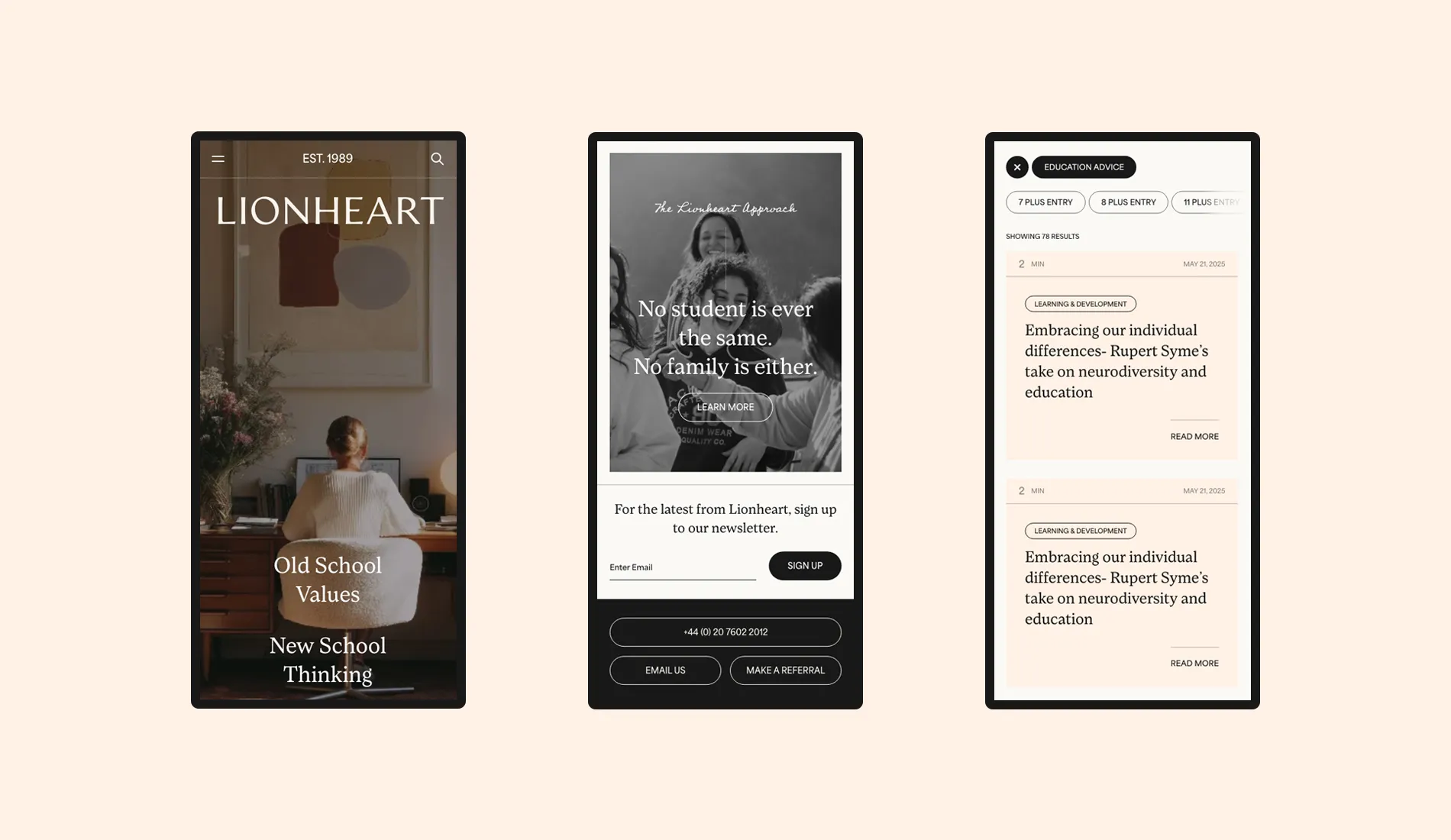
If a visitor lands on your website and cannot quickly tell what you do, who it is for and why it matters, the rest of the page has to work much harder. One of the most valuable lead generation features is a strong opening section with a clear headline, supporting copy and a visible call to action. Think Ronseal, it does what it says on the tin.
This is not about cramming everything into the first screen. It is about answering the first commercial question in the visitor’s mind. For a professional services business, that might mean stating the service, sector focus and outcome with confidence. For a more complex organisation, it may mean directing users into the right service pathway straight away.
The trade-off is that transparency can sometimes feel less clever than abstract brand language. Commercially, clarity wins.
2. Calls to action that match buyer intent
Not every visitor is ready to book a call on the spot. Some want to request a proposal, some need to see relevant work, and some simply want to ask whether you are the right fit. The best websites recognise that intent varies.
A good lead generation setup uses calls to action that reflect where people are in the decision process. A high-commitment button such as “Request a quote” may work well on a service page, while “Talk to our team” or “Discuss your project” can feel more approachable on broader pages. The wording matters because it frames the effort and value of getting in touch.
Too many competing calls to action can create hesitation, but a single rigid option can lose viable leads. It depends on the service, audience and sales cycle.
3. Forms that ask enough, not too much
Forms remain one of the best features for lead generation because they capture intent directly. They also remain one of the easiest places to lose conversions. Long, clumsy forms frustrate users. Very short forms can improve completion rates but leave sales teams with weak information.
The right balance usually comes from asking only for what is genuinely useful at that stage. Name, company, email and a short project overview are often enough for an initial enquiry. If budget, timelines or platform requirements are important qualifiers, they can be included, but only if they help route and prioritise leads rather than create needless friction.
Good form design also matters. Clear labels, sensible field spacing, mobile usability, inline validation and reassuring microcopy all improve completion. Even the confirmation message should be considered. A vague thank-you page wastes an opportunity to set expectations and reinforce professionalism.
4. Trust signals placed where decisions happen
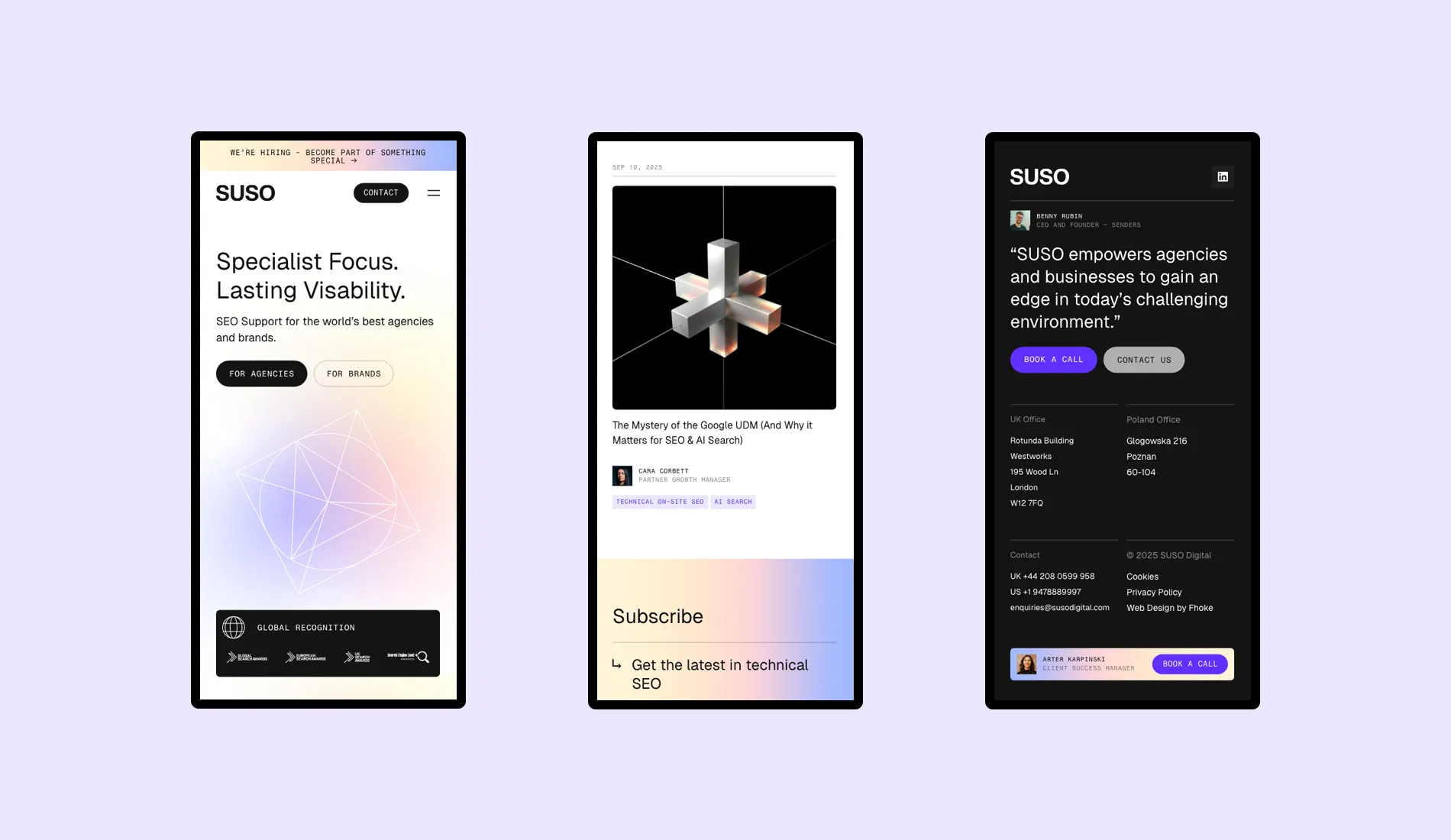
Trust is not built by one testimonial tucked away on a separate page. It is built by layering credibility throughout the journey. When a prospect is considering whether to contact you, they look for evidence that your business is established, competent and capable of delivering the outcome promised.
That evidence can take different forms: case studies, selected client logos, awards, review snippets, accreditations, sector experience and specific results. The key is placement. Trust signals work best when they support a conversion decision at the point of hesitation.
5. Service pages built around decision-making
Many businesses hide their strongest lead-generation opportunity within thin service pages that say very little. A strong service page should do far more than describe an offer. It should help a prospect evaluate fit.
7. Speed and technical performance
Page speed is often discussed as a technical issue, but it is just as much a conversion issue. Slow pages increase drop-off, weaken trust and limit the effectiveness of every other lead generation feature on the site.
Performance affects how quickly users can engage with content, navigate service pages and complete forms. It also supports visibility in search, which influences how many qualified visitors arrive in the first place. A fast website creates a sharper, more competent impression. That matters, particularly for premium brands where quality is expected.
8. Search-friendly page structures and CMS control
Lead generation starts before a user lands on the site. If your pages are difficult to find, the funnel is weaker from the outset. That is why SEO-friendly architecture and practical CMS controls are often overlooked but highly valuable features.
Your team should be able to edit page titles, meta descriptions, headings, image alt text and on-page content without technical obstacles. Service pages should be structured around real search intent, not internal jargon. URLs, content hierarchy and internal page relationships all affect discoverability and user understanding.
9. Content pathways for different audiences
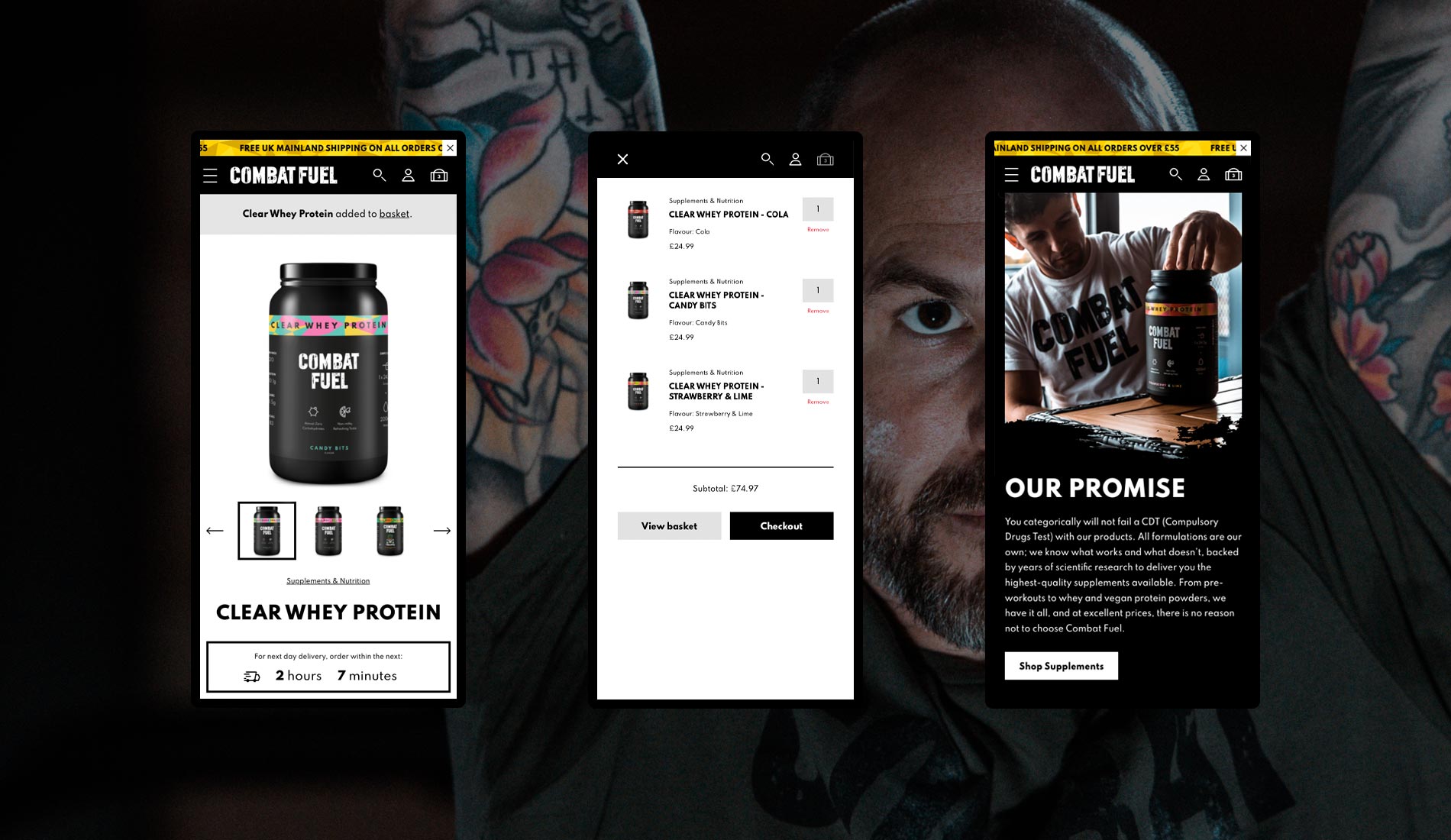
Not every lead should be treated the same way. A larger organisation looking for a full digital partner will need different reassurance from an SME owner seeking a website rebuild. One of the best features for lead generation is the ability to guide different audience types towards the content and calls to action most relevant to them.
This can be achieved through sector pages, tailored service journeys, segmented case studies or carefully planned navigation. The goal is to simplify everything so it always feels relevant. When users feel a website understands their needs, conversion becomes far more likely.

10. Analytics and conversion tracking
A site that generates enquiries but provides no useful insight is harder to improve. Effective analytics and conversion tracking should be included so you can see what is working, where users drop off and which pages contribute most to conversions.
Without that feedback loop, website improvements become subjective. With it, design and marketing can be shaped by evidence.
No single feature will transform a weak website into a high-performing lead generation tool. Results usually improve when the fundamentals align: clear positioning, persuasive service content, thoughtful calls to action, strong trust signals, fast performance and a website your team can manage with confidence.
That is where experienced planning matters. The strongest digital projects are not created from trends or plugin wish lists. They are built around commercial goals, user behaviour and the realities of how buying decisions happen online. That is also why businesses working with web design agencies such as Fhoke often see the best results when strategy, UX, design and technical delivery are treated as one process rather than separate tasks.


