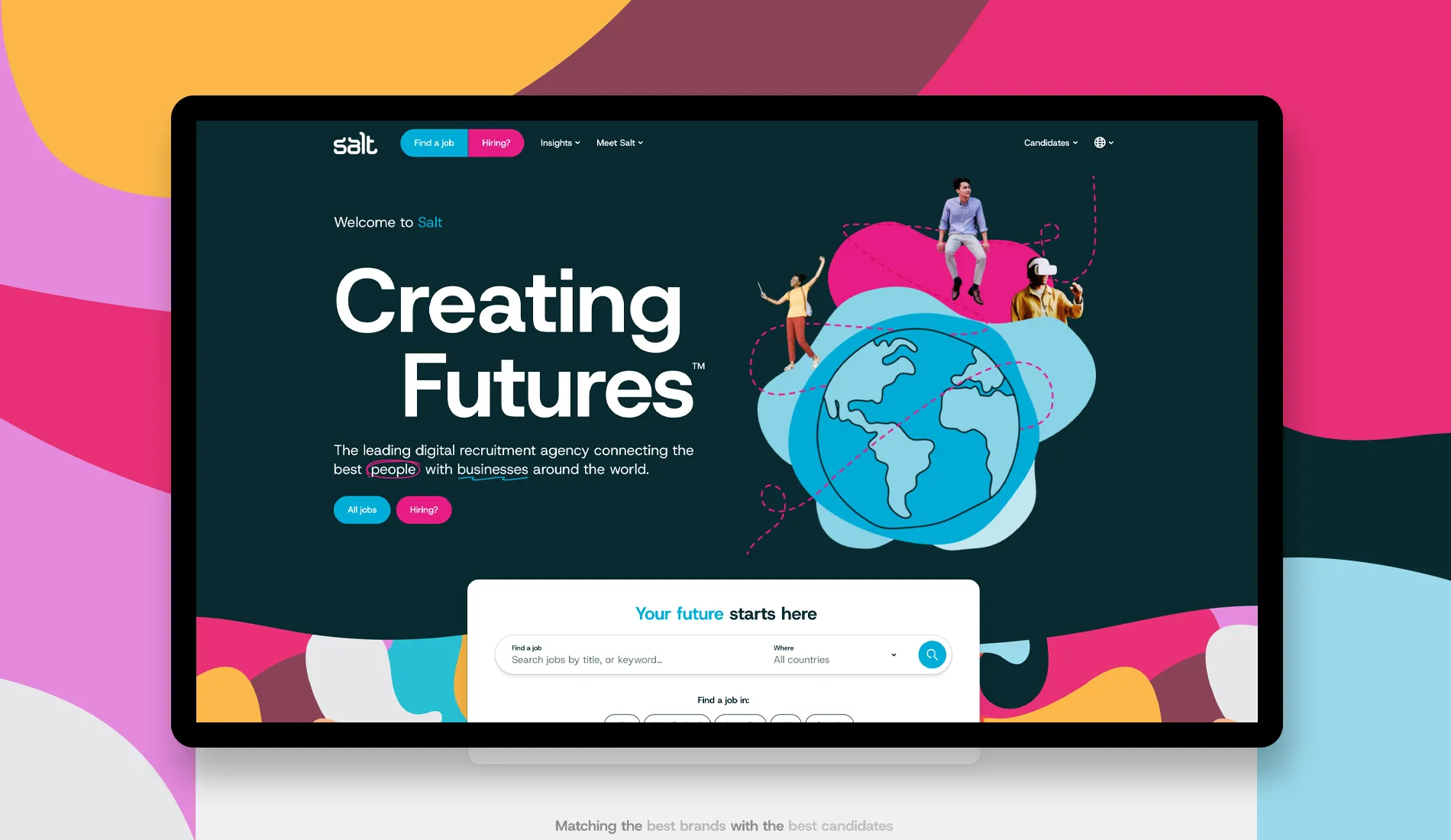
At Fhoke, most core website and eCommerce projects fall between £15,000 and £30,000, with larger or more complex builds exceeding that. Recruitment websites often sit within that range because the real scope is driven by CRM or job-distribution integrations, search, multiple audiences, content migration, candidate functionality and regional requirements—not just the number of pages.
Useful planning bands
| Planning budget | What it can realistically cover |
|---|---|
| Around £15k–£20k | Focused bespoke recruitment marketing site with a clear content model and relatively straightforward job functionality. |
| Around £20k–£40k | Deeper UX, custom WordPress design, structured job search, CRM/job-feed integration, larger migration or multiple audience journeys. |
| Around £40k–£60k | Larger recruitment site with multilingual or multi-region needs, advanced integrations, candidate functionality and significant content operations. |
| £60k+ | Complex platforms, extensive migration, multiple systems, portals or product-like functionality. |
Note: these are estimated bands based on Fhoke’s vast experience and core project range, not fixed packages or quoted prices. Every website is unique- some cheaper, some more expensive; talk to us.
Why page count is a poor way to price recruitment websites
A 100-page recruitment site can be relatively straightforward if most pages use the same content patterns. A 25-page site can be much harder if it needs multiple systems to exchange data, complex candidate accounts and several regional experiences.
The real cost comes from the number of distinct problems the project needs to solve: information architecture, user journeys, content types, recruitment technology, migration risk, search, multilingual requirements and editorial governance.
The biggest cost drivers
1. Recruitment technology integration
A job feed is not one universal feature. Bullhorn, Broadbean, JobRelay, Idibu and custom APIs all create different technical requirements. Salt, for example, uses Broadbean to feed live vacancies into its WordPress site and send applications back. Annapurna has evolved its recruitment integration over time, demonstrating why the integration layer needs to be maintainable rather than treated as a one-off embed.
2. Job search and filtering
Keyword search, location, discipline, salary, job type and other filters need a coherent data model. The expensive part is rarely drawing the filter controls; it is deciding how the data should work, how users actually search and what happens when source data is inconsistent.
3. Candidate functionality
Saved jobs, CV uploads, accounts, alerts and preferences increase the number of states and workflows that must be designed, developed and tested. Sphere is a useful example: its website combines the wider WordPress experience with candidate accounts, saved jobs, CV uploads and search.
4. International and multilingual requirements
Salt’s project involved consolidating 14 regional sites into a single centralised platform. That is a very different migration from rebuilding a single-market agency website.
5. Content migration
Sector pages, team profiles, jobs, insights, guides, office pages and case studies add migration work. A successful migration also requires redirect planning so that valuable URLs and search equity are not lost.
How long should you allow?
Fhoke advises that most custom recruitment websites take roughly 12–20 weeks, depending on complexity. That time is not simply development. A properly planned recruitment website project needs discovery, information architecture, wireframing, design, integration development, content work, migration, QA and launch preparation. Not to mention the collaborative approach we take during every phase; both sides need to feel happy and confident in the final output.
As a London- and Salisbury-based web design agency, we make sure to keep things simple, straightforward and free of jargon. That’s why working with us is where most clients get a return on their investment.
Fhoke’s view
If you get two proposals at £25,000, they are not necessarily the same value. One may include proper discovery, UX, recruitment integration, redirect planning, accessibility and post-launch support; another may largely cover visual redesign and implementation. Compare the scope and the assumptions behind the number, not just the number itself.
What a useful proposal should make explicit
- Discovery and stakeholder input
- Information architecture and user journeys
- Wireframes and UX
- Visual design
- WordPress or other CMS development
- Recruitment CRM / job-distribution integration
- Content migration responsibilities
- Technical SEO and redirects
- Analytics and measurement
- Accessibility and QA
- Training, launch and post-launch support


