
A bespoke UK travel website can vary substantially in cost because a marketing-led destination site and an integrated booking platform are very different projects. The main cost drivers are UX and design scope, the number and complexity of trip templates, content migration, search and filtering, booking or CRM integrations, ecommerce requirements and bespoke functionality. Figure out the ultimate end result before comparing quotes, and you may even need to consider phasing it.
Why travel website quotes vary so much
Two travel websites can look superficially similar while requiring very different work behind the scenes. One may publish destination content and send qualified enquiries to a sales team. Another may need live availability, multiple departures, customer accounts, payments, deposits, CRM synchronisation and post-booking tools.
That is why a useful budget conversation starts with scope rather than page count.
It’s also worth checking out What Should a Travel or Tour Operator Website Include before briefing a web design agency.
What changes the cost?
| Cost driver | Lower-complexity example | Higher-complexity example |
| Content architecture | Small number of destinations and standard pages | Many destinations, trip types, departures and cross-linked content |
| UX and discovery | Simple navigation | Search, filtering and multiple traveller journeys |
| Trip content | One reusable trip template | Several product types with different itinerary/data requirements |
| Booking | Enquiry form | Live availability, payments, deposits or booking engine integration |
| CRM / systems | Manual follow-up | API integration and automated data flow |
| Migration | Limited page migration | Large itinerary library, media and SEO-sensitive URL migration |
| Accounts / portals | None | Customer login, booking management or travel documents |
| International needs | Single language/currency | Multiple languages, markets or currencies |
| Custom development | Standard CMS components | Bespoke calculators, portals, APIs or workflow tools |
Three common travel website scopes
1. Marketing and enquiry-led travel website
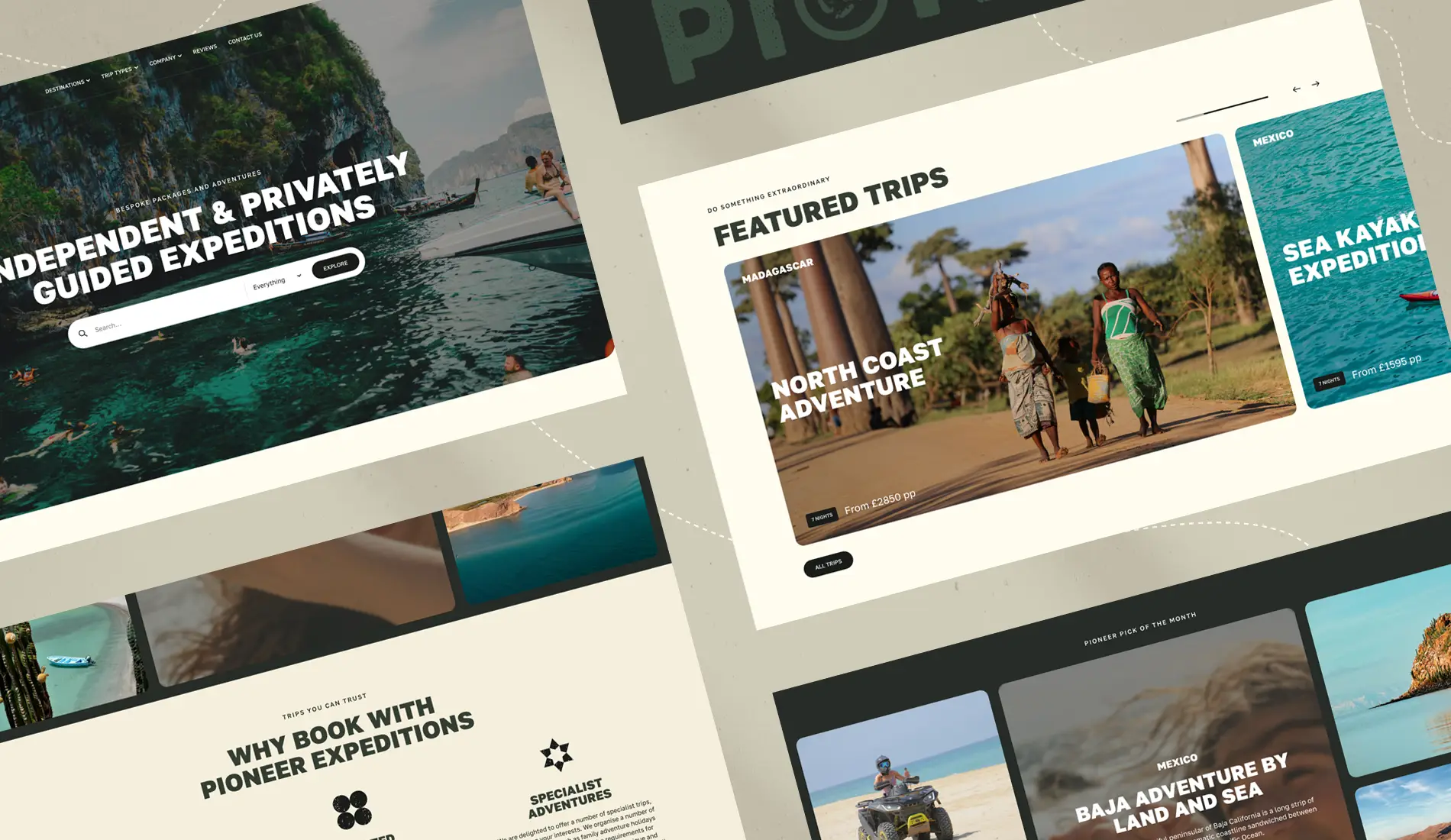
This suits a tailor-made operator or specialist travel company where the website’s main job is to inspire, explain and generate a qualified enquiry. The project may include destination and trip templates, editorial content, forms, CRM handoff and strong mobile UX without requiring the website itself to complete the transaction.
Pioneer Expeditions is closer to this model: a bespoke WordPress experience built around destination storytelling, structured trip content and a streamlined route from inspiration to enquiry.
2. Content-rich tour operator website with booking integration
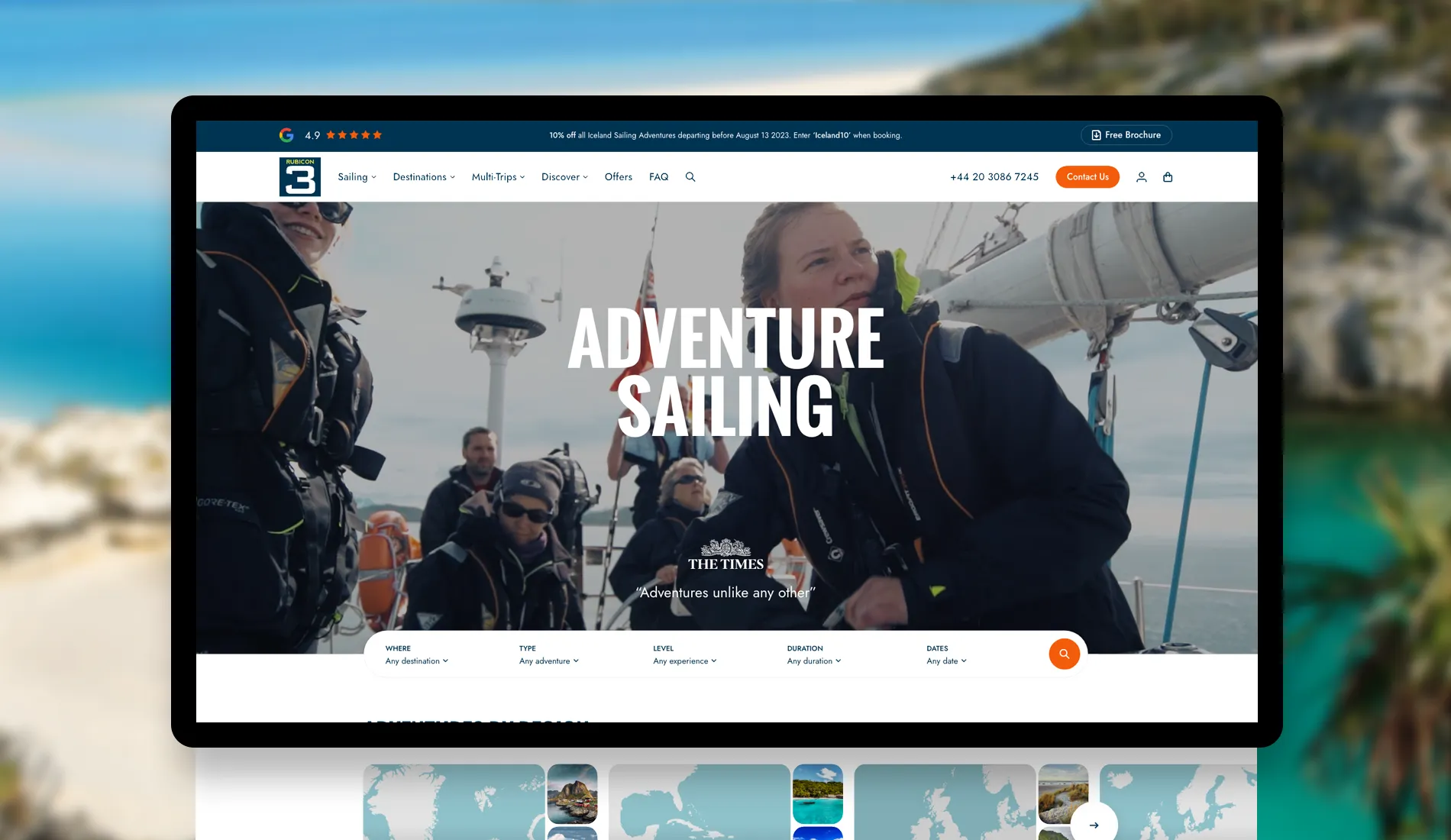
Complexity rises when the site has multiple trips, departures and ways to browse, plus an external booking system or ecommerce layer. Search/filtering, integration discovery, data mapping, error handling and testing become meaningful parts of the project.
Rubicon 3 Adventure illustrates the content complexity: expeditions can be explored by destination, adventure type, experience level, duration and travel dates, while WooCommerce supports the commercial layer.

3. Bespoke booking or customer platform
At the upper end, the website becomes part of the operating system of the travel business. Customer accounts, bespoke quotation logic, booking management, payment schedules, live availability, CRM synchronisation or travel-document workflows can turn a website project into a software project.
The Pop-Up Hotel shows why scope matters. Fhoke’s WooCommerce implementation includes custom booking functionality for accommodation options, upsells, deposits, staggered payments and reporting. That is very different from ‘just’ adding a booking button to a brochure site.
In another of our articles, we explore the Best CMS for a Travel Website: WordPress vs Travel Platforms vs Bespoke
What should be included in a proper travel website quote?
- Discovery and requirements definition
- Information architecture and traveller journeys
- Wireframes and responsive UI design
- CMS and content modelling
- Front-end and back-end development
- Search/filtering where required
- Booking, CRM, payment or API integrations
- Content and URL migration responsibilities
- SEO migration and redirect planning
- Analytics and conversion tracking
- Browser/device testing and launch support
- Training, documentation and post-launch support
Don’t compare quotes by page count alone
A 40-page site built from a few repeatable templates can be simpler than a 15-page site containing complex booking logic. Ask each agency what is included in discovery, UX, integrations, content migration, testing and post-launch support. A lower headline figure can become expensive later down the road if vital work is excluded from the main project. Even think about building functions in now that you might need months down the road. Bake it in now, ready for later.
How Fhoke scopes travel projects
As a specialist travel-site agency, we don’t publish a single fixed travel-site price; we just can’t, because scope depends on the design, destination/trip templates, booking functionality, integrations, migration, and custom features. Generally speaking, we work from around £12,000 upwards, while more complex travel projects need to be scoped against their actual requirements.
For timing, we tend to suggest planning a bespoke travel website over 12–15 weeks, with content readiness, booking integrations, migration, and custom functionality all able to extend the timeline. We also always say, never rush these things!
Where to spend budget first
| Priority | Why it usually deserves budget |
| Content architecture | A weak structure becomes expensive to fix after hundreds of trips are entered |
| Traveller UX | The site has to make a high-consideration purchase easier to understand |
| Integration planning | Late booking/CRM discoveries can force redesign or rework |
| Reusable CMS components | Reduce the cost of launching future destinations and campaigns |
| Migration and SEO | Protects existing content equity and avoids broken journeys |
| Performance and mobile QA | Travel imagery and complex pages can become slow quickly |
Where you might be able to simplify things
- Don’t build a bespoke booking engine if a proven existing platform fits the workflow.
- Don’t create dozens of unique page layouts when reusable trip and destination templates will work.
- Don’t migrate obsolete content simply because it exists on the old site.
- Don’t add filters until the size and structure of the catalogue justifies them.
- Phase non-essential portal or account features if they don’t need to be live at launch.
cost follows the commercial model
Fhoke have designed various travel or experience-led website from Pioneer Expeditions to Rubicon 3 Adventure and The Pop-Up Hotel, and they all required very different technical approaches. Pioneer is strong on content using enquiry-led bookings; Rubicon combines structured expedition discovery with onsite ecommerce; while The Pop-Up Hotel requires a custom transactional booking system. A credible quote has to reflect those differences.
Fhoke’s view
The most useful early budget question is not ‘how many pages do we need?’ It is ‘what does the website have to do between someone discovering us and becoming a customer?’ Once the destination structure, booking model, integrations, content migration and internal editing needs are clear, the project becomes much easier to price—and much harder to under-scope.
FAQs
What is the starting price for a Fhoke website?
Our website projects start from £12,000. A travel website may cost more depending on UX, content architecture, integrations, booking requirements, migration and custom functionality.
How long does a bespoke travel website take?
Most bespoke travel websites take around 12–15 weeks. Integration complexity, content readiness, migration and bespoke functionality can extend that timeline.
Does a booking engine make a travel website more expensive?
Usually, because the integration needs discovery, UX planning, data mapping and testing. A simple external booking link is different from an API-driven or custom booking experience.
Is WordPress cheaper than a bespoke travel platform?
Not automatically. Platform choice is only one part of scope. A bespoke WordPress theme/site can still involve significant UX, content modelling and integrations; a custom app might also be justified when the purchasing journey genuinely needs it.


