
For many content-led travel agencies and tour operators, WordPress is a strong CMS because it can model destinations and itineraries flexibly while integrating with external booking and CRM systems. A travel-specific SaaS platform can suit simpler all-in-one requirements, while bespoke applications make sense when the booking or customer workflow is genuinely unique. Start with operations and integrations, not the CMS brand.
The CMS decision is really an operating-model decision. Travel businesses often ask which CMS is ‘best’ as though the answer can be separated from booking, content and internal workflow. It cannot. A small operator selling a handful of fixed tours has different requirements from a multi-destination tailor-made specialist, an expedition company with complex departures, or a hospitality business taking deposits and upsells online.
The useful question is: which platform gives the marketing team enough content freedom while connecting cleanly to the systems that run the travel business?
Travel CMS comparison
| Option | Best suited to | Strengths | Watch-outs |
| Bespoke WordPress | Content-rich agencies, tour operators and experience brands | Flexible content modelling; strong editorial capability; wide integration options; ownership of front-end experience | Hosting, maintenance and integration quality need active management |
| Travel-specific SaaS / website platform | Operators whose workflow closely matches the platform | Faster setup; travel functions may be bundled; one vendor for more of the stack | Design/content flexibility and portability may be constrained by the product |
| Headless / bespoke CMS + front end | Larger or multi-channel organisations with complex publishing needs | Highly structured content; API-first delivery; strong separation of systems | More technical complexity and usually greater build/maintenance cost |
| Bespoke web application | Unique booking, account or operational workflow | Can match the business process precisely | Should be justified by requirements that off-the-shelf systems cannot handle |
When WordPress is a strong fit for travel
- You have substantial destination, itinerary and editorial content.
- Your team needs to launch new destinations, trips and campaigns without developer involvement.
- You want the public website experience to be highly bespoke.
- You need to integrate an existing booking engine or CRM rather than replace it.
- SEO and content marketing are important acquisition channels.
- You need flexible relationships between destinations, travel styles, trips and guides.
Pioneer Expeditions WordPress website is a good example. Fhoke restructured a large body of trip content and migrated existing itineraries into a bespoke WordPress theme. Visitors can browse different travel styles while the team has a more scalable system for managing the offer.
When a travel-specific platform may be enough
A specialist travel platform can be sensible when its built-in workflow closely matches the business. If the priority is getting a standard catalogue, availability and booking flow online quickly, the efficiency of an all-in-one product may outweigh the need for a highly bespoke content experience.
The trade-off is usually control. Before committing, check how much freedom you have over URL structure, metadata, destination content, templates, analytics, integrations, data export and the customer experience outside the core booking flow.
When WooCommerce belongs in the conversation
Travel does not always mean you have to choose a specific ‘travel CMS’ provider. Some travel and hospitality products behave more like ecommerce. Fhoke’s work for The Pop-Up Hotel uses WordPress and WooCommerce development with custom booking functionality for accommodation, upsells, deposits, staggered payments and reporting. Rubicon 3 Adventure also combines a bespoke WordPress theme with WooCommerce to support its expedition offer.
The lesson isn’t that WooCommerce is automatically the best travel booking engine. It is that the commercial model should determine whether ecommerce functionality is appropriate.
When bespoke development makes sense
If the required workflow can’t be represented cleanly by an existing booking product, a bespoke application or portal may be justified. Examples include unusual quotation logic, complex customer accounts, multi-stage booking management, specialist operational tools or a heavily branded customer portal.
Fhoke’s travel service explicitly separates content-led WordPress sites, ecommerce-led experiences and bespoke web-app requirements. That is a healthier decision model than forcing every brief into one preferred platform.
Five questions to answer before choosing the CMS
| Question | Why it changes the platform decision |
| How is a trip sold? | Enquiry, fixed-price booking and complex quotation require different journeys |
| Where does availability live? | The website may need an API or booking-engine integration |
| How much content changes? | Destination-heavy marketing needs strong editorial workflows |
| How complex is discovery? | Large catalogues need structured data and filtering |
| What must the team own? | Some businesses value CMS freedom; others value a more managed platform |
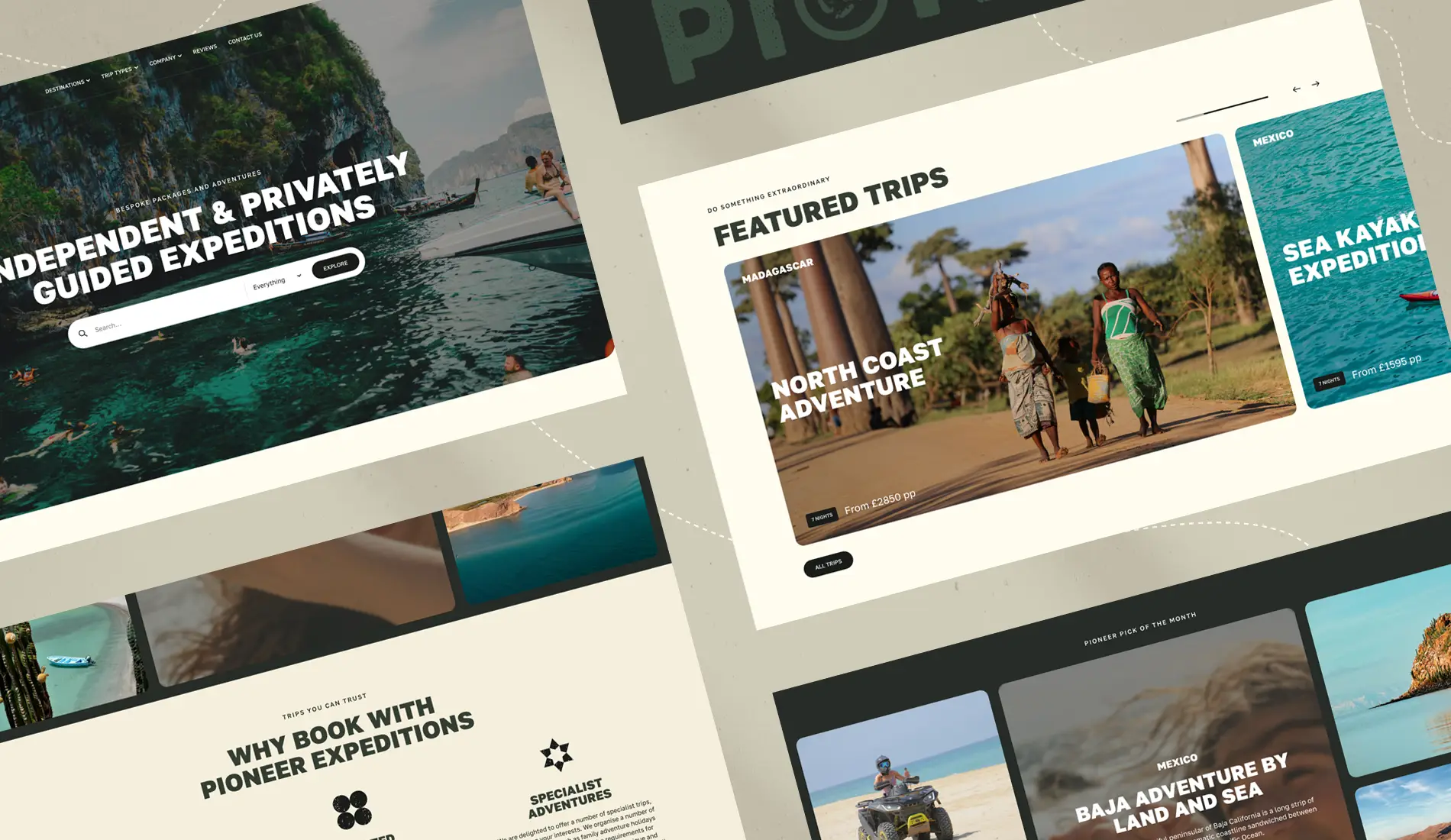
Real project observation: Pioneer’s problem was not ‘WordPress’
Pioneer’s old site had grown into a patchwork of themes, plugins and third-party tools. The answer was not to abandon WordPress; it was to rebuild the content model and implementation properly. Fhoke created a bespoke WordPress setup with a more sustainable structure for trips and itineraries.
That distinction matters. A poorly governed WordPress installation and a well-architected bespoke WordPress site are not the same product.
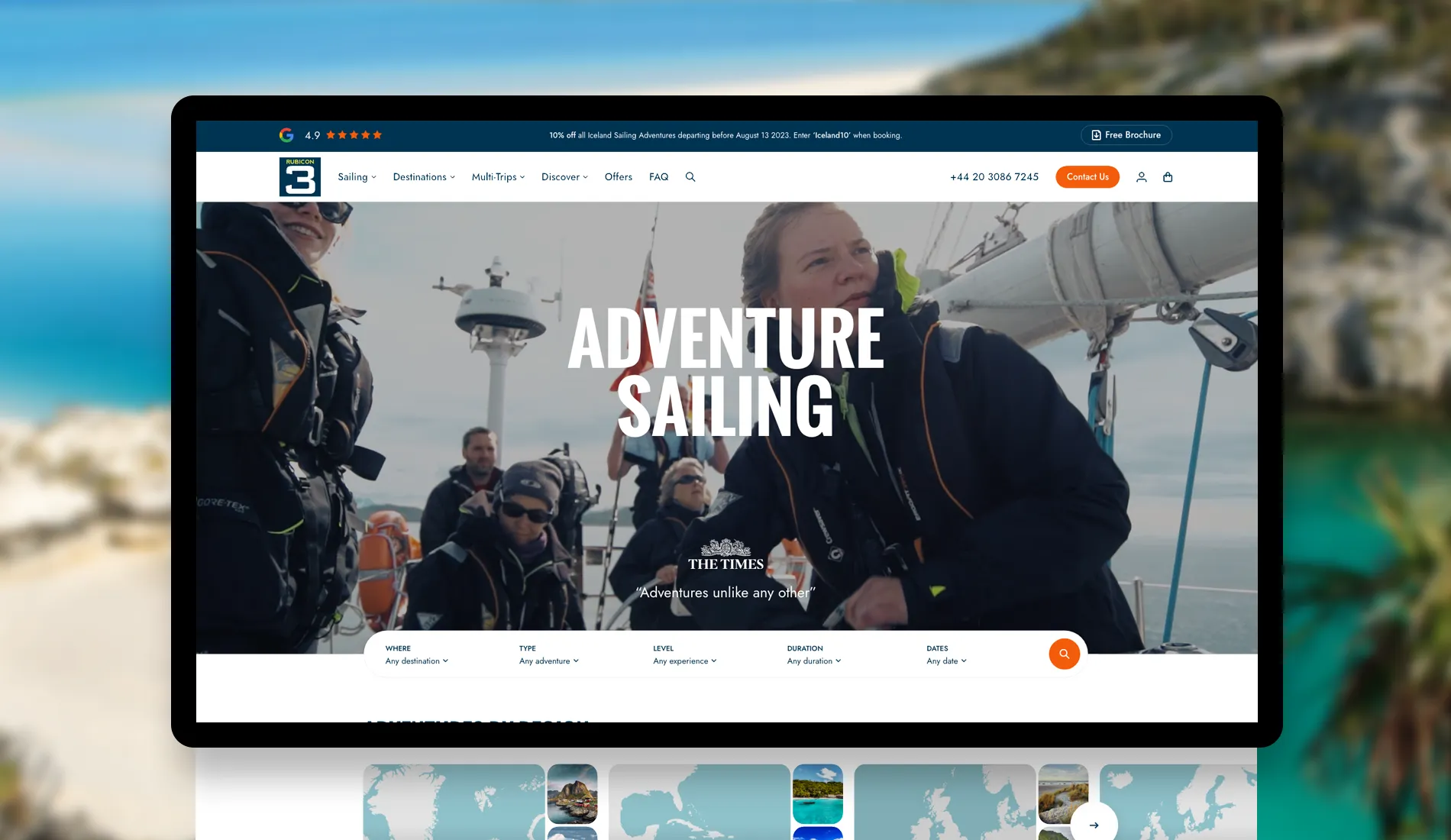
Real Fhoke project observation: Rubicon needed content and commerce
Rubicon 3 Adventure needed visitors to discover expeditions through destination, adventure type, experience level, duration and departure date, while the business also needed commerce capability. Fhoke combined a bespoke WordPress content architecture with WooCommerce rather than treating CMS and transaction as mutually exclusive choices.
Fhoke’s view
For most travel briefs, we would not choose the CMS in the first meeting. As a travel website design agency, we would map the traveller journey, content types, booking model, availability source, CRM and internal publishing process first. WordPress is often a very strong answer for content-led travel businesses, but it should win because it fits those requirements—not because an agency has decided every travel company needs WordPress.
In this article: What Should a Travel or Tour Operator Website Include in 2026? – we look at why a good travel website is not just a beautiful online brochure and not simply a booking engine. It needs to connect discovery, comparison, reassurance and action.
Decision checklist
- Map the booking and enquiry workflow before selecting a platform.
- Confirm what the existing booking system exposes: API, feed, widget or embed.
- List the repeatable content types: destinations, trips, departures, itineraries, guides and offers.
- Test how editors will create a new trip without developer support.
- Check SEO control over URLs, metadata, canonicals and indexation.
- Understand hosting, maintenance, security and support responsibilities.
- Check data ownership and export options before adopting a SaaS platform.
- Use bespoke development only where the workflow creates genuine business value.
FAQs
Is WordPress good for a travel agency website?
Yes, particularly when destination content, itineraries, editorial and SEO are important. It can also integrate with external booking systems where suitable integration methods are available.
Do I need a travel-specific WordPress plugin?
Not necessarily. A bespoke WordPress content model can manage trips and destinations while a separate booking platform handles availability and transactions. The right architecture depends on the business.
Is a bespoke CMS better than WordPress for travel?
Only when the requirements justify it. Building more software creates more responsibility. Bespoke development is valuable when a genuinely distinctive workflow cannot be handled well by established platforms.
Can WooCommerce be used for travel bookings?
It can be adapted for appropriate transaction models. Fhoke has used WooCommerce in travel and hospitality projects including Rubicon 3 Adventure and The Pop-Up Hotel, where custom functionality supported the required journeys.


