
For most established recruitment agencies, WordPress is the strongest all-round CMS because it can combine a flexible marketing site with structured jobs, search, candidate journeys, and recruitment platform integrations. Webflow can suit simpler marketing-led recruitment sites, while bespoke application development makes more sense when the website is becoming a product in its own right, with complex accounts, workflows or proprietary functionality.
Recruitment CMS comparison
| Requirement | WordPress | Webflow | Bespoke application |
|---|---|---|---|
| Marketing content | Excellent | Excellent | Depends on CMS layer |
| Structured jobs | Excellent | Good for simpler setups | Unlimited |
| CRM / API integrations | Excellent with custom development | Possible, but often more constrained | Unlimited |
| Candidate accounts | Good with custom development | Limited for complex requirements | Excellent |
| SEO and landing pages | Excellent | Very good | Depends on implementation |
| Editorial control | Excellent | Excellent | Depends on what is built |
| Long-term flexibility | Excellent | Good | Excellent |
| Best fit | Growing recruitment firms | Simpler marketing-led sites | Recruitment products / platforms |
Start with the recruitment model, not the CMS
A recruitment website is rarely just a brochure site with a jobs page attached. It typically has at least two audiences: candidates seeking opportunities and employers seeking evidence that the agency can solve a hiring problem. Larger firms may add multiple sectors, territories, hiring models, consultant profiles, research, salary content and regional teams. The CMS has to hold all of that together without forcing the marketing team to work around the technology. That is exactly what Fhoke’s years of experience with recruitment website design illustrates.
Salt Recruitment had fourteen regional websites before moving to a single centralised WordPress set-up with multilingual capabilities and Broadbean integration.
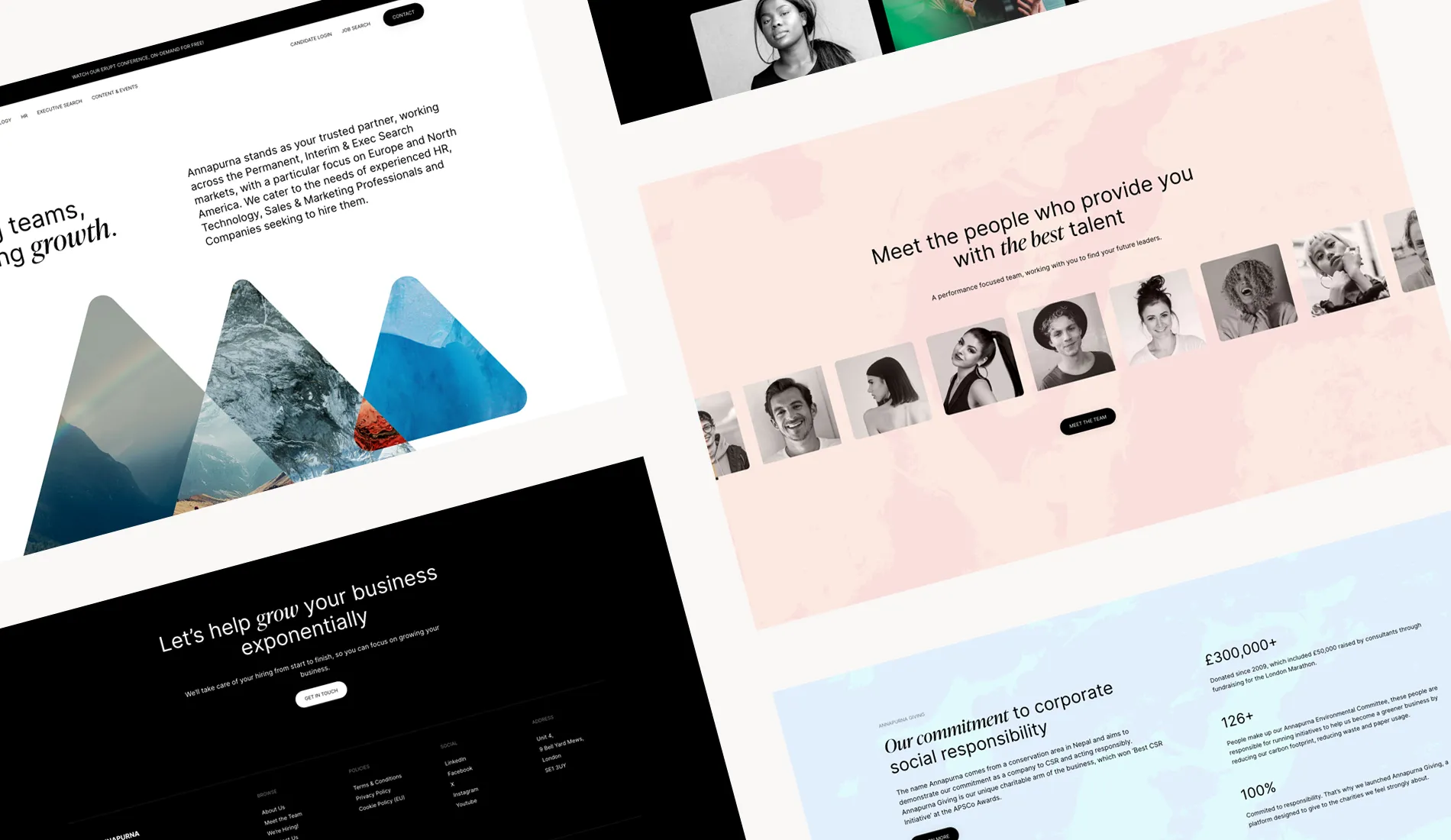
Annapurna has used WordPress since 2013 as the marketing layer around their recruitment platforms, while its implementation has evolved from Bullhorn to Broadbean via JobRelay as the business changed over the decade. And we’ve been a part of that in all that time.
FOUND Careers is slightly different, as it uses manually added jobs via custom WordPress vacancy pages, with search, filtering, applications, and CV uploads, without requiring a separate recruitment platform to dictate the entire user experience.
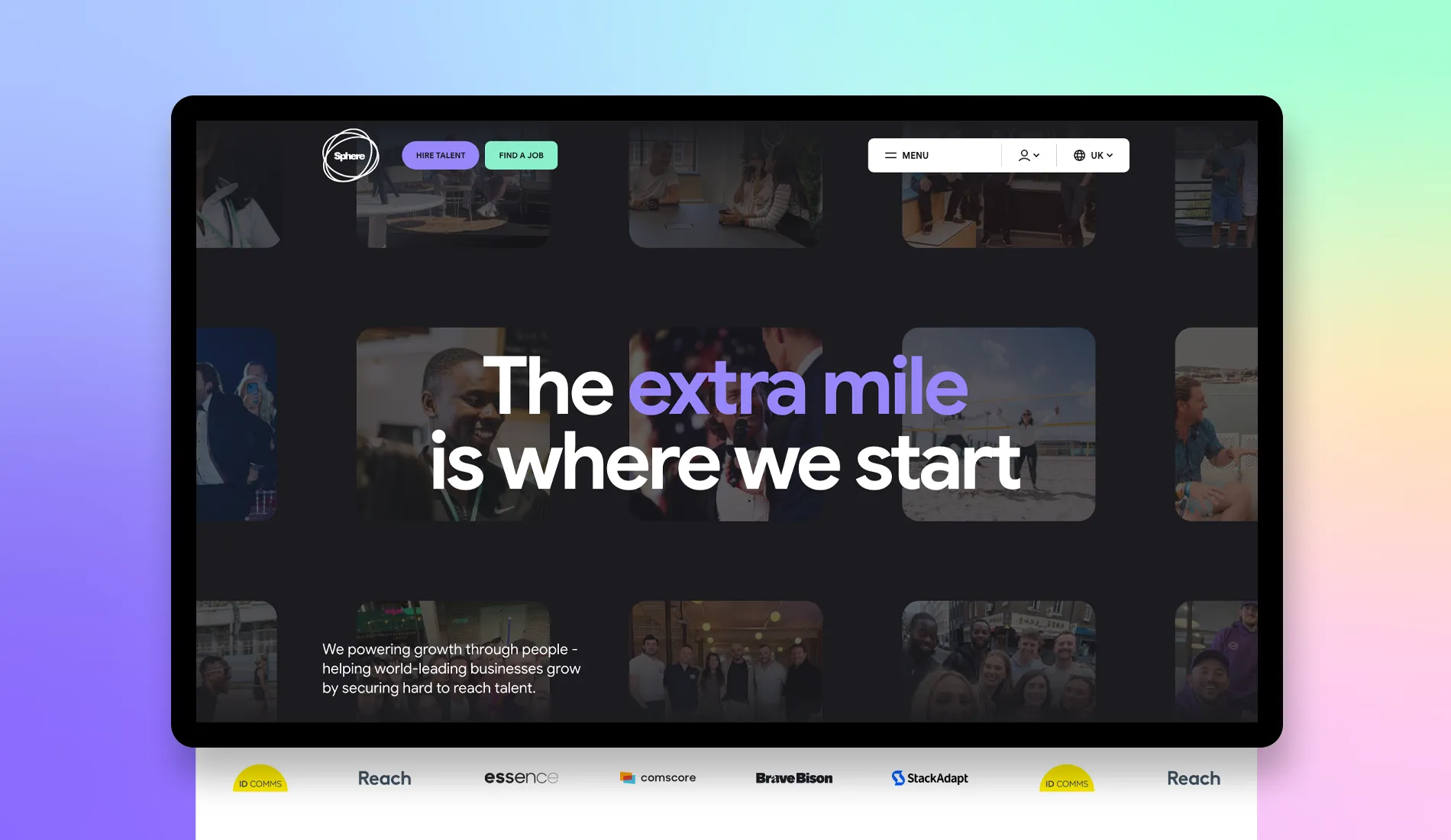
Sphere, another London recruitment agency, brings live vacancies to the website from a Broadbean feed, creating a seamless journey from discovering a role to applying. Candidate account functionality also allows users to register, log in and save opportunities, helping turn the website into a practical recruitment tool rather than simply a showcase for the business.
Why WordPress usually wins for established recruitment agencies
WordPress is particularly useful when jobs are only one part of the user experience. The same platform can manage sector pages, consultant profiles, employer content, insights, salary guides, campaign landing pages and case studies while custom development handles jobs and integrations.
- Jobs can be modelled as structured content rather than ordinary pages.
- Search and filters can be designed around candidate behaviour instead of exposing the CRM’s internal taxonomy.
- Recruitment CRM or job-distribution data can be pulled into the website while applications are pushed back to the recruitment stack.
- Marketing teams retain direct control over pages, campaigns, resources and SEO content.
- The platform can expand into multilingual or multi-region publishing without rebuilding the entire marketing site.
When Webflow is a sensible choice
Webflow can be a strong choice for a smaller recruitment business whose website is predominantly a design-led marketing site. If the functional requirement is a relatively simple job feed, a small number of specialisms and straightforward lead generation, there may be little value in building a more complex stack.
The decision becomes less comfortable when the roadmap already contains complex candidate accounts, deep job filtering, several recruitment integrations or a large multilingual content model. At that point, evaluate the future state before choosing the fastest platform for launch.
When bespoke application development is the better answer
Sometimes the website has crossed the line into software. If the core proposition depends on proprietary candidate matching, employer dashboards, multi-stage onboarding, sophisticated permissions, subscriptions or operational workflows, a bespoke application can be cleaner than stretching a conventional CMS indefinitely.
Fhoke’s view
We don’t choose a recruitment CMS by asking which platform has the longest feature list. We first map the candidate journey, employer journey, recruitment data, and internal publishing workflow. For most recruitment agencies we work with, that comes back to WordPress because it keeps the marketing team in control while giving developers enough freedom to integrate the systems that drive the business. Besides, we do bill ourselves as a leading London WordPress agency; we’ve also been using it since 2008, so we know it’s more than capable.
A useful decision rule
Choose WordPress when content, SEO, recruitment integrations and long-term marketing flexibility all matter. Choose Webflow when the website is primarily a simpler marketing experience. Choose bespoke development when the website itself is becoming a software product.


